WHEN I TAKE TIME TO PRAY by Tony Casson

What are the things that I get out of prayer?
What sort of gifts am I given?
The fact that I pray doesn’t make my life fair
And gives me no car to be driven.

The words that I pray do not pay what I owe,
The words that I speak can’t be spent.
I can’t use my prayers to buy flour to make dough,
And they cannot be used to pay rent.

The words that I pray won’t buy food to be eaten
And they won’t give me clothes to be worn,
But praying WILL help me to never be beaten,
And to sew up my heart when it’s torn.

Prayer will help me find ways to help others
And help me to face each new day.
It will help me view all those I meet as my brothers
And guide every word that I say.

My prayers will remind me to always be kind
And to greet with a smile those I meet.
They will help me to keep pleasant thoughts in my mind
And safeguard my soul from defeat.

My prayers will enable my spirit to rise
And will open my eyes so I see;
My prayers will help me at last realize
That the future holds hope out to me.

Prayers bring me closer to God, whom I love,
And they help me imagine His face.
With prayer I can see Him look down from above,
And with prayer I experience grace.

The glorious gifts that can be found when I pray
Cost me nothing, they’re given for free.
The chains that have bound me will just fall away
And the truth will be there before me.

Prayer gives my life it’s best chance for completion,
And carries me close to the One
Who saved every soul from Satan’s depletion
Through the death of His sacrificed Son.

My prayers won’t buy jewelry of silver or gold,
And they won’t make me famous, it’s true.
But praying will give me the strength to be bold
And to do those things God wants me to.

Prayer should be something we never forget
In the hustle of living each day;
How long the list is of the things that I get
When I make time in my life to pray.

“Today Is…a good day for a sneak peak” By Tony Casson

I know that I have been remiss in posting things here lately, but there is so much going on and I have so much to do in order to be ready for my release next May. I have many projects I am working on. The most significant thing has been completing all of the first drafts for my book of daily devotionals. My dear friend Diane has been hard at work interpreting my torturous printing and doing the typing to get it ready to be published as an E-book (hopefully in November…stay tuned). It is a major step for me in my walk with God, and I am humbled at the work He is doing through me. The title of the book is “Today Is….A Gift From God”, and I would like to share this entry for August 14 with all of you. Your comments would be deeply appreciated.

August 14

TODAY IS…

the perfect day to take back what has been stolen from us.

 “The God of peace will soon crush Satan under your feet.” 
Romans 16:20a NIV

            Every single one of us has had something stolen from us by Satan. No one has escaped except for Christ. We all have given into temptation and we all have sinned and every time we have sinned, we have allowed Satan to take something else from us. We have been his willing victims.

He has stolen dignity from some of us. From others, he has stolen decency. He has stolen our faithfulness to our spouses and our faith in God. He has stolen our truthfulness, and he has stolen our integrity. We have let him slip away in the darkness with our morality, and we have let him get away unnoticed with our kindness. He has pocketed our happiness, and smashed the windows to our souls and left the space empty. He has cheated us out of our love for ourselves, leaving us unable to love anyone else. He has conned us out of our certainty, leaving us with our doubts.

When we weren’t looking he walked away with our compassion, and left disdain in its place. While he distracted us with self-indulgence, he swiped our desire to help others and replaced it with selfishness. He has stolen our tolerance while trying to convince us that hostility and impatience were better suited to our personalities.

He has stolen our sight, making it impossible to see the pain of others and he has taught us to lie, cheat, and steal while we have hungrily pursued the education.

More than likely, what Satan has stolen from you is somewhere in this list. If not, it needs to be added, because everyone has lost something. Some of us have lost more than one thing, and perhaps more than a few have lost it all. He will try to prevent you from calculating your exact losses. He will try to cloud your judgment, distract you, or take something else from you. He pretends to be the best friend you ever had, but he is – in reality – the biggest danger you have ever faced. He will suck everything good out of you until there is nothing left but your last breath and then he will take that as well.

But the Good News is that today is not going to be like yesterday. Today we are going to take it all back. God has been waiting for today for a very long time, and He is glad that it is here. We must reach out and ask God to take our hand and tell Him we want everything Satan has stolen from us. Today is the perfect day to take it all back, and God is the PerfectOne to help us all get it.

IN KNOWLEDGE LIES THE POTENTIAL FOR CHANGE by Steve Marshall

By Steve Marshall

One clear and present function of any law is to punish the wrong-doer.  But a secondary characteristic of equal importance is for the law to serve as a deterrent to others; a warning against breaking that societal covenant.

I am one such wrong-doer, currently serving a seven and a half year sentence for breaking a law. I foolishly engaged in the downloading and trading of online child pornography. It stands as the single most careless and stupid act of my lifetime.

Let me state upfront that I blame no one else for the shameful actions that led to my downfall. I knew I was breaking the law and I did so anyway. We live in a world where we are held responsible for our actions and I accept full culpability for mine.

But while I was aware of the illegality of my activities, I had no concept of the extent of the consequences; of the price that I would have to pay; both legally and personally, for breaking the Law.

Since the advent of the internet, the number of arrests for possession of child pornography has skyrocketed. The offenders cut across all strata of society. The stereotype for this charge is the predator or pedophile and without a doubt there are many arrestees who fit this profile. But among those presently serving time for this offense are those who simply had too much time on their hands, those who were merely curious or those who like myself, took a perverse delight in violating society’s taboos.

Speaking for myself, there was no thought given to the continued exploitation of innocent children through the circulation of these heinous photographs. I stupidly regarded this as a victimless crime.

After all, these children had no way of knowing that their images were being viewed, right? Wrong! Each time an arrest is made and a photo identified in the FBI database, the government sends a letter to the subjects in the picture notifying them that they have been viewed. Some of these unfortunate people, many of whom are now well into their adulthood, have received hundreds of these letters.

Here is another common misapprehension: We are all anonymous on the Internet. Wrong again! Each computer has an IP address that is easily traceable. Finding you is no problem at all for police and the FBI.

I cannot help wondering how might I have behaved differently had I been exposed to some of the harsh realities of I what I had become involved in; the full nature of the dangerous game I was playing and the consequences that awaited me should I be caught.

For these reasons, it seems to me that the effectiveness of child pornography laws as a deterrent would be heightened greatly by an aggressive campaign by the Justice Department to educate the public on the realities of child pornography through newspaper ads and public service announcements on radio and television. Toward that end, I have written such a PSA which I offer gratis to the Justice Department:

VIDEO AUDIO
A man is seated in darkness, his face illuminated only by the ambient light of the computer screen before him. As the announcer speaks, the CAMERA pushes slowly into him.


A set of bars slides from right of frame to left.


The camera settles on a close-up of the man’s face through the bars, a single tear rolling down his cheek.


ANNOUNCER: Child pornography is against the law. Yet, since the innovation of the Internet, arrests for this crime have risen 2400 percent. You are not anonymous on the Internet. If you are engaged in this activity, we will find you. We will arrest you.  And you will be sent to prison for anywhere from five to twenty years. SOUND EFFECT: A jail door slamming shut.


ANNOUNCER: A message from the United States Department of Justice.


I can state with absolute authority that had I seen such an announcement, I would have been scared straight.  If there is genuine interest in stemming the rising tide of Internet child pornography, I recommend a vigorous, intensive and narrowly focused program of public education. It will prevent the further exploitation of children and former children who have seen their lives tainted by sexual abuse and the recording of it on film; and it will prevent others from following in my misguided footsteps down a road that brings only shame and ruin.


“Another Good Idea”

A group from the Buffalo, NY area, CautionClick (www.cautionclick.com), has sent this proposed letter to be passed on to those who represent anyone reading this. Please pass it on to others and print copies to mail to those addresses posted, as well as to your individual representatives.

Thank you,
Tony

We are attaching a copy of a letter we would like to encourage you all to send out to your individual federal representatives as well as to both

Honorable Bob Goodlatte,
Chairman Committee of Judiciary
US House of Representatives
2309 Rabyburn HOB
Washington, DC 20515
202 225 5431
Fax 202 225 9681

Honorable Patrick J. Leahy,
Chairman, US Senate Committee on the Judiciary
224 Dirkson Senate Office Bldg.
Washington, DC 20510
202 224 7703
Fax 202 224 9516

We would encourage you to send a copy of this letter to your family members to send out their own copies of the letter to their representatives as well. We would like to get the message out that we support the distinctions that the USSC is making with sentencing and encourage any type of reform of the current system. Every letter helps send a message that there are many people out there that support this thinking..

Make sure you include your return address. It is necessary on all correspondence with elected officials.

Thank you.
CautionClick

THE LETTER

Dear (YOUR LOCAL CONGRESSMEN),

In December of 2012 the United States Sentencing Commission released a report entitled “Federal Child Pornography Offenses” (available in full at ussc.gov). The report is the result of a multi year process in which the USSC examined cases of offenders sentenced under the federal sentencing guidelines and corresponding penal statues concerning child pornography offenses.

The conclusion of this report states “The Commissions report is intended to provide Congress and the various stake holders in the federal criminal justice system with relevant and thorough information about child pornography offenses and offenders. As illustrated by the report, child pornography offenses result in substantial and indelible harm to children who are victimized by both production and non-production offenses. However, there is a growing belief among many interested parties that the existing sentencing scheme in non-production offenses no longer distinguishes adequately among offenders based on their degrees of culpability and dangerousness. Numerous stakeholders-including the Department of Justice, the federal defender community, and the Criminal Law Committee of the Judicial Conference of the United States Courts-have urged the Commission and Congress to revise the non-production sentencing scheme to better reflect the growing body of knowledge about offense and offender characteristics and to better account for offenders varying degrees of culpability and dangerousness.”

“The Commission believes that the current non-production guideline warrants revision in view of its outdated and disproportionate enhancements related to offenders collecting behavior as well as its failure to account fully for some offender s involvement in child pornography communities and sexually dangerous behavior. The current guideline produces overly severe sentencing ranges for some offenders, unduly lenient ranges for other offenders, and wide spread inconsistent application. A revised guideline that more fully accounts for all three factors-the full range of an offender s collecting behavior, the degree of his involvement in a child pornography community, and any history of sexually dangerous behavior-would better promote proportionate sentences and reflect the statutory purposes of sentencing. Such a revised guideline, together with a statutory structure that aligns the penalties for receipt and possession, would reduce the unwarranted sentencing disparities that currently exist. The Commission also suggests that Congress may wish to revise the penalty structure governing distribution offenses in order to differentiate among the wide array of newer and older technologies used by offenders to distribute child pornography. Finally, the Commission also recommends to Congress that it consider amending the notice and restitution statutes for victims of child pornography offenses. The Commission stands ready to work with Congress, the Federal Judiciary, the Executive Branch, and others in the federal criminal justice community to improve the sentencing scheme for these extremely serious offenses.”

I support the findings of this report and ask you to give consideration toward amending the sentencing guidelines concerning child pornography offenses.

Thank you for your time and consideration,

Sincerely,

NAME
CONTACT INFORMATION

“PRISON, PART 3” by Tony Casson

“….let God transform you into a new person
by changing the way you think.” Romans 12:2 NLT

“If we face our tasks with the resolution to solve them,
who shall say that anything is impossible?” Wilfred Grenfell

The Month of March will soon step aside to make way for its replacement. For many, April 1st will be a day full of the usual array of “April Fools” jokes and pranks. For myself, the first day of April will mark the beginning of my fourth, and final, full year in prison.

As I prepare to close the door on my FIRST three years at Oakdale, I find it interesting, if not disturbing, that – with only one exception – there exists no single three-year period in my past that I would NOT relive with major changes if given the opportunity to do so. The exception? These last three here in Oakdale.

That may be a difficult concept for many to accept or understand, but I have USED those three years to the best of my ability. I believe that I have, also to the best of my ability, asked God to guide my steps and determine my path, and I have made a discovery of extraordinary importance: I have found the person within me that I was looking for all of my life. I have discovered that by letting God IN, I could force all of the things that I hated about myself OUT.

During those three years soon coming to a close, I have written numerous articles and made many observations for these Chronicles. I am no Hemmingway, that is for certain. There will be no Pulitzer Prize for me. But I know that the work contained here is honest, and I have always tried to open the eyes of those who have honored me by reading my words, and those of a few friends who have willingly ‘put themselves out there’.

With the help of my Son, Anthony; my brother-in-law, Larry; and my own personal Angel sent from God, Diane, who began as a sympathetic friend of my sister but now is a friend of MINE – through all of their efforts I will forever have a way to look back and know that I worked hard to do something meaningful.

But these Chronicles are not the only, nor the greatest, personal achievement while here; my ‘special Angel’ has helped me with another project that is nearing completion: The writing of “Today is….A Gift From God”. When finished, “Today Is….” will contain 366 different daily devotionals intended to bring others closer to God, help them through each day, and to provide a source of hope and purpose for each day that God gives us on this earth. There are other projects as well – both in their development stages as well as those set to begin in the future – that are all a part of the future and the hope that God has promised me.

I can ‘wish’ all I want that the changes that have come over me would have taken place elsewhere, but they didn’t. THIS is where God wanted me to be in order that I might learn to be who HE wanted me to be. I’m not there yet, but I keep moving forward, and I would not trade these last three years for anything, nor would I change any single day IN those three years.

I do NOT recommend this environment for everyone. It IS, after all, prison. Best to learn the lessons one needs to learn while surrounded by those who love you and breathing the air of the free.

But as for ME?

Well….I have no complaints at all. I am thankful to all who have given me their time, their friendship, their love, support, and insight.

And I humbly thank God. Amen.

Resetting My Life Or: How I Learned To Stop Worrying And Love Prison

by Steve Marshall

      First, let me stress that the title is a joke. I couldn’t resist the temptation to parody the 1964 classic film, “Dr. Strangelove or: How I Learned to Stop Worrying and Love the Bomb.” In truth, I love prison about as much as I love the bomb.

      Actually, this is about how I arrived at the unexpected realization that I accept being a prisoner and embrace the fact that I am where I need to be. This is the story of how I arrived at this surprising crossroads.

      When I was arrested on April 15, 2009, it was a sudden and immediate wake-up call; a punch in the gut that informed me that my life had gone seriously off the rails. Like many people in a similar situation, I became painfully aware ‘that I had lost sight of my moral compass ‘ and that my spiritual cup was bone dry. I tried to address the problem by joining a traditional Christian church. But with each’ passing Sunday, I realized that, for me, this was not a comfortable fit.

      You see I am, by definition, an atheist. Most Judeo-Christian theology strikes me as magical thinking. My life is informed by science, logic, provable fact and natural law. Having said that, I must add that I have the greatest respect for the beliefs of others. Whatever gets us through the circuitous maze that we call life and provides us with strength, wisdom, comfort and a sense of direction is ‘aces in my book. Let’s face it – no one has the facts. All we have is what we believe to be true. In that sense, each of us has his or her own personal truth.

      So where does an atheist go for spiritual enlightenment? In my case, the answer lay with the Unitarian-Universalist Church.  You see, the U-Us have no dogma of their own. In fact, they offer classes in the world’s religions, urging us to seek what makes sense to us. Take something from Christianity, ‘something else from Buddhism, add a pinch of Judaism or a dash of Hinduism and let simmer. It is, in effect, “Build Your Own Theology.” The principle goal and purpose of Unitarian-Universalism is to lead us in the direction of becoming better people. I knew after attending my first service that I had finally found a spiritual home.

      But when t came to be locked up in a’ remote Southern prison, I discovered that they offered no Unitarian-Universalist services. In fact, they had never heard of either faith (the Unitarians and the Universalists merged in the 1960s), even though both have existed for hundreds of years. So what was I to do? How was I to continue this spiritual journey?

      Happily, I found more than one person in my circle of remaining friends who were Unitarian-Universalists and were willing to download the sermons of U-U ministers from a number of different churches and mail them to me. I keep them in their own envelope and withdraw one each Sunday to read and digest. I have come to think of myself as “A Congregation of One.” Someone very close to me (a U-U, of course) has even started a blog with that as a title, posting excerpts from the letters that I write after reading each sermon.

      Most of the sermons provide interesting and engaging food for thought. But occasionally I’ll come upon one that is a real life changer. Such was the case on Sunday, January 12, 2013 when I read a sermon titled “Want What You Have.” My first reaction upon seeing that title was that I was probably not going to connect with this sermon’s message. After all, what I have is three and a half more years of living in a federal prison. Who could possibly want that? Well, never judge a book by its cover nor a sermon by its title.

      This particular sermon was based on the works of Rev. Forrest Church, the former minister of All Souls Unitarian-Universalist Church in New York and a religious scholar of some renown.

      As I began to read, I was informed that “Rev. Church had written an essay which bore the title “Want What You Have” when he was in the end stages of his life, suffering from terminal cancer. I was taken aback with this news as I stopped reading to consider how anyone could advance such an idea – want what you have – when what he had was a virulent disease that was killing him. I read on and soon realized that I was myopic in my grasp of Rev. Church’s message. His thesis challenged me to look at the bigger picture and see that what I had was more than just a life in prison. What I had, in fact, was an unparallel opportunity to learn and grow.

      When my life deteriorated to the point of leading me to become a convicted felon for the first and only time at the advanced age of 65; the one thing that became blindingly clear was that I was in serious need of a mid-course correction. My problem was so serious that it would require much more than a simple fix. I needed to have my entire life reset.

      In order to achieve a reset, I needed to go back to square one; to lose my home, my family, all of my possessions; my freedom itself.

      I must confess to the fact that I had become a master of the dubious art of distracting myself from any meaningful contemplation that might result in my becoming a better human being. I had my giant screen television, an endless stream of movies and my beloved iPhone, which ensured that I would never again have to endure another nanosecond of boredom. I had the Internet to take me anywhere I wanted to go, including the most degrading and debasing places possible. All of these things conspired to sap away my basic humanity. And then, in the blink of an eye, it was all gone.

      The biggest loss, of course, was my marriage and the love and esteem of people who meant everything to me. Some of those relationships survived; others did not. Some of the people whom I loved to the depths of my soul are lost to me forever. But a reset can’t always be pretty. It can come with a very high price tag. It doesn’t happen in a day, a week” a month or even a year. It takes time, patience, attention and a fierce desire to be a better person than I have ever been. I finally have the time and motivation to focus laser-like on that goal. The seeds ‘for this reset were sown the moment I first stepped into the U-U church while I was still under house arrest. The work has continued at a steady pace ever since.

      I have almost reached the midpoint in the six and a half years that I must spend in federal custody. I know to a certainty that I am already a better man than I was on the morning of April 15, 2009. But I still have some distance to travel before I will be who I want to be – the man I always thought I was. That’s who I want to become.

      I am a work in progress.

      I am grateful for the time, energy and motive to become that man. That is the immutable gift that has been given to me.

      So.   Do I want what I have?

      Absolutely!

“WE ALL HAVE AN OPPORTUNITY TODAY” by Tony Casson

“A Toastmasters Update”

I have mentioned Toastmasters before, and we recently held our first speech contest in the chapel in front of about 100 fellow inmates and staff. I have stated before that I am a reluctant public speaker and the angst I felt prior to this event honoring Martin Luther King Jr was of unreasonable and mammoth proportions. Fortunately, God stood with me and saw me through it. I won 2nd place. The man who won 1st place is a very gifted and talented young man named Derek Weatherspoon and I am glad that he won. For myself, I won simply by proving I could do it, and I won by moving many individuals to comment to me afterwards. I am humbly grateful to all of them for their kindness, and ETERNALLY grateful to God for his unwavering guidance, support, and strength. Here, then, is the text of that speech:

“WE ALL HAVE AN OPPORTUNITY TODAY” by Tony Casson

“With this faith we will be able to hew out of the Mountain of Despair a Stone of Hope”. Those words, spoken by Dr. Martin Luther King, Jr. in 1963 became the theme for the four acre memorial honoring him in Washington, DC.

The figure of Dr. King is sculpted to appear as if he is stepping out of a 30 foot tall block of granite, which represents the Stone Of Hope. The expression carved into his face has been variously described as ‘determined’, ‘resolute’, ‘stern’, and by some, ‘angry’.

In preparing this speech, I looked to the words of Dr. King himself and I tried to imagine his voice as he spoke about his hopes and his dreams, not just for the black man, but for all of mankind; and not just for America, but for the world.

After carefully considering all that I had read, and after looking around at the condition of the world today, I came to the conclusion that the expression on the face of the man emerging from the Stone Of hope was one of disappointment.

Even though we are preparing to inaugurate an African-American as President of the United States for a second term, I believe Dr. King would be disappointed that it has taken so long, and that we still find it necessary, and appropriate, to refer to him as an AFRICAN- American, rather than simply as an American.

I believe that Dr. King would be disappointed that words he spoke during a lecture at the University of Oslo in 1964 are, sadly, just as true today as they were the day he spoke them. He said, “There is a sort of poverty of spirit which stands in glaring contrast to our scientific and technological abundance. The richer we have grown materially, the poorer we have grown morally and spiritually. We have learned to fly the air like birds and swim the sea like fish, but we have not yet learned the simple art of living together as brothers.”

While it is true that the law prevents us from posting signs over doorways, drinking fountains, and places of business that state ‘white only’ or ‘colored only’, INVISIBLE signs that separate people are still in existence today.

Within the confines of this institution, one doesn’t have to strain to hear reference to the ‘white side’ of the dining hall, or to the ‘black side’; to the ‘white entrance’ or to the black entrance’. And in the housing units themselves, official signs may contain words that are within the law and are politically correct, but it is the INVISIBLE signs that tell us we have ‘white TVs’ and ‘black TVs’.

In his Nobel Peace prize acceptance speech, Dr. King said, “I have the audacity to believe that people everywhere can have three meals a day for their bodies; education and culture for their minds; and dignity, equality, and freedom for their spirits”.

I believe Dr. King would be disappointed because poverty in the United States of America, and around the world, is at the same levels, or higher, than when he had the AUDACITY to believe that it could be otherwise.

Dr. King’s efforts opened up opportunities for education that previously had not existed for many people, but I believe Dr. King would be disappointed to know that cases of school segregation still languish in Federal courts in Louisiana, Mississippi, and Alabama; cases that were begun BEFORE he was assassinated in 1968.

And he would be further disappointed that those opportunities are willingly rejected today by so many young people who choose, instead, faster, far more dangerous and deadly ways of traveling on the road to what they perceive is success. A road that leads many of them only to death, or to incarceration in institutions such as this one.

And on the issue of dignity for the human spirit, I believe Dr. King would be PROFOUNDLY disappointed that the most undignified, vilest, most derogatory term that a white man can use in reference to a black man is used with disturbing casualness and frequency BY black men in reference to other black men.

I believe Dr. King would be the FIRST to stand before us all and tell us that word has no business crossing the lips of ANY man, black or white, at any time, for any reason.

I believe that Dr. King would be disappointed that many of those he left behind have chosen to honor him with symbols, but have somehow forgotten his substance. I believe Dr. King would rather see safe, healthy, educated, and well-fed children playing on the streets of progress, rather than see his name on signs marking the streets of his forgotten hopes and dreams.

But we have an opportunity today, to resolve to pick up the hopes and dreams of Dr. King and carry them into the promised land that he glimpsed before he was murdered.

We have an opportunity today, to resolve to become a small part of the solution so we can never be accused of being a BIG part of the problem.

In 1963, in Detroit, Michigan, Dr. King challenged the world when he said, “If a man hasn’t discovered something he is willing to die for, he isn’t fit to live.”

We have an opportunity today to prove to the world that not only was Dr. Martin Luther King, Jr. VERY fit to live, but that what he died for was worth the price that he paid.

That what he DIED for was worth the price that his wife paid.

And that what he DIED for was worth the price that his 4 little children paid.

We have an opportunity TODAY to resolve to work to change the expression on the face of the man emerging from the Stone Of Hope from one of disappointment, to one of SATISFACTION for a job well done.

And I pray to God we do not fail to take advantage of it.

I thank you.
Note: May be reprinted without permission of the author.
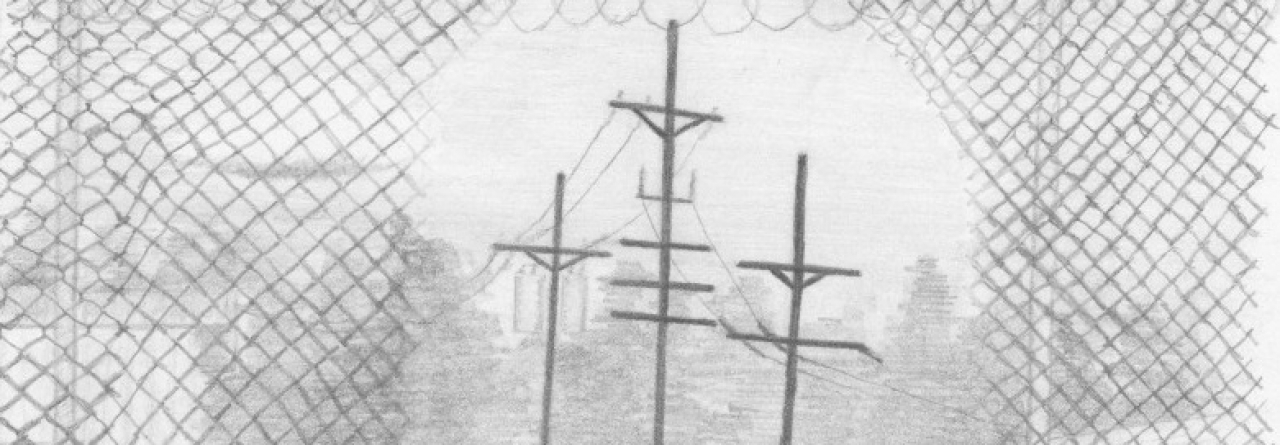
“GOD GAVE US EYES” by Tony Casson

God gave us eyes to see the things
He placed throughout the land;
To appreciate the beauty that
He made with loving hands.

He gave us eyes to see the sun,
The moon and all the stars;
To stare in awe and wonder
At creations near and far.

God gave us eyes to see the trees,
The petals on a flower;
And with these eyes we all can see
God’s majesty and power.

God gave us eyes to help us seek
A husband or a wife;
He gave us eyes to see a child,
The miracle of life.

With these eyes, it’s possible
To see all that He’s done
To make the world a perfect place
For daughter and for son.

But these eyes have obligations
To fulfill for fellow man;
To see the pain and hunger
And to ease it if we can.

To see when someone’s hurting
And to help their sorrow end;
To see their need for nourishment,
To see them as a friend.

God gave us eyes to recognize
The need to spread His Word;
To see the need to witness
And embrace all we have heard.

God gave us eyes to see it all,
But our eyes were just a start;
God’s great Wisdom also gave
That thing we call a heart

“AMERICA’S CULTURE OF INCARCERATION – PART 7 THE WORST NIGHTMARE OF ALL”

By Tony Casson

“…uphold the rights of the oppressed and destitute.” Psalm 82:3b NLT

“We did not dare to breathe a prayer
Or to give our anguish scope!
Something was dead in each of us
And what was dead was hope.”
Oscar Wilde “The Ballad of Reading Gaol”

            For the typical individual facing freedom after years behind bars, the prospects – while not hopeless – are limited; the challenges are many and intimidating; the obstacles are numerous; and the odds of success seem to be stacked against them. Society looks down on those bad boys and girls who keep the wheels of “justice” turning and have appeared in its newspapers and on its television sets. The public is both titillated and repulsed by the tattooed tough guys and gals who create havoc on shows like “Cops.” They are inclined to think that this is just how some people are and have allowed themselves to be convinced that people who are broken cannot be fixed.

Perhaps to a degree, and for some, that is a true statement. But there is nothing that will guarantee failure as surely as doing nothing. To say that the criminal justice system as it exists today is focused on trying to rehabilitate, educate, restore and reintegrate those who have gone to prison is simply not true. Failing many of our children early in life; creating an industry in human misery where the profits are enormous; feeding that industry through the abject failure of half-hearted or non-existent rehabilitation and education programs; and dealing with those who have been newly re-introduced to society in a heavy-handed, oppressive way all contribute to the failure that is called “criminal justice” in America today.

With so much money at state, it is easy to hide behind the cynical stance of “they don’t want to change.” However, if the American public was aware of how many men and women desperately want to change, they might alter that stance. Unfortunately, these men and women are expected to change but do not have, nor are they given, the education, job skills, life skills, confidence, support and encouragement that are required to bring about those changes. When all that is done is to extend a hand to someone while standing on their chest, we can hardly be surprised at the negative result.

When I was young, we would occasionally engage in a cruel activity (hey, I was young!) called “piling on.” In the course of playing, one person would wind up on the ground and someone would yell “PILE ON!”, whereby all the rest would bury the unfortunate soul at the bottom of a pile of unyielding bodies. I have been that body at the bottom. I have known the suffocating, frightening sensation of being trapped. I have known what it was like to want to get out. But I have also known the helpless feeling of having absolutely no idea how to accomplish that. I struggled, but to no avail. I tried to get out from under the pile but I was dependent on the very people who had me trapped. How, then, was I to regain my freedom?

Now let’s pile on some more: In addition to all of the difficulties and obstacles facing felons that I have laid out for you, a convicted sex offender – regardless of the nature of the offense – has several oppressive, invasive and restrictive conditions that will make any effort at reintegration back into society so extremely difficult as to be almost impossible. For many, these conditions and restrictions create what is tantamount to a life sentence of suspicion and condemnation that very well should be considered cruel and unusual punishment. At the very least, the current methods used to monitor and control registered sex offenders are nothing more than tactics which bully and belittle American citizens and should be a clear violation of the civil rights of these individuals.

There is no denying that when a child is abused and/or killed by a predatory monster, it is a very natural response for all parents to share the pain of those who have lost a part of themselves that can never be replaced. But as I have tried to point out on these pages, the ones least likely to harm any child are the ones who draw the most attention. People are understandably angry, scared, ad confused; publicity-seeking politicians and a sensationalist media make certain of that.

But those who have had no contact with children and have served the time to which they were sentenced are angry, scared and confused as well; a length of time in prison deemed by many professionals as being excessive, reactionary counterintuitive. When these individuals are released, a whole array of separate, suffocating, demeaning and isolating rules and regulations await them. These are in addition to those that face other felons released from prison.

The single most daunting item facing sex offenders newly released from prison is the sex offender registry, on which they are required to be listed in all of our states. The astonishing number of repressive items, including polygraph testing, GPS ankle-bracelet monitoring, living restrictions and a host of other horrors is overwhelming. The subject of the registry is so dense and complex that it cannot be undertaken here and I will address it in a separate article at a later date.

The battles and debates over many of these “protective” rules and regulations rages in courtrooms across the country. But as they continue, those who fall under their purview have to deal with the consequences created by them.

Finding a place to live in increasingly more difficult – almost impossible in some cities. Some people are not allowed to live with their families. Some actually “live” in tents and “visit” their families during the day.

Some states issue driver’s licenses with “sex offender” stamped on them in red; an updated version of the scarlet letter. How does this protect children and what does it accomplish beyond embarrassing and humiliating the one required to produce it?

Sex therapy group sessions required on a weekly basis for years involve standing up at each session and reintroducing yourself as a sex offender, re-stating your offense and then proceeding to re-live your experiences and remain in the past for 60 minutes a week as a constant reminder of what you did, no matter what you have done to redefine who you are and making moving forward difficult at best.

The average person can simply not fathom how permanent and black is the mark on your life when you misplace your morals, your decency, your maturity and your common sense.

When a sex offender applies for a job and discloses his or her offense, that person is looked at by some with open disdain and distaste. An individual’s ability to earn a living and care for him or herself and those they are responsible for is severely hampered by that mistake that cannot be undone no matter how much they want to or how hard they try.

If you can find a place to live and you are unfortunate enough to have children, they will be subjected to uncomfortable stares and barely disguised whispers after your neighbors discover who you are by running to the computer. Once the “flag” pops up, the circumstances and your remorse will not matter. More innocent victims will be created beyond those who have already suffered as this hate directed toward you spills over onto your children unfairly and unkindly.

These statements can be taken as warnings to those who think child pornography and Internet fantasies are a game. A moment in the “privacy” of your home can cost you your freedom and net a lifetime in the public’s disapproving eye. It can, in fact, cost you more than you thought possible and surely more than anyone should be expected to pay. These statements are also a plea for reform and the upholding of the Constitution of the United States.

Will the situation be impossible for those leaving prison? Or course not; at least not for everyone. But for many, the American nightmare will continue long after the closing of prison gates behind them. The real horror and the real shame will only just be starting. For many, the rejection, isolation and harassment they experienced in prison will pale in comparison to life as a “free” citizen of this country.

If two wrongs can never make a right, then the tens of thousands of wrongs being perpetrated against citizens of this country can never be expected to make right what is so very wrong in America today.

The national embarrassment that constitutes post-prison “treatment” and monitoring of sex offenders – particularly those guilty of non-contact Internet crimes – is the most inexcusable abrogation of the basic rights afforded to Americans by our Constitution that we have ever allowed to occur.

More prejudicial, discriminatory and demeaning than the treatment of African Americans under the idiotic banner of “separate but equal”; as judgmental and blatantly anti-American as the internment of Japanese-Americans in World War II; and more inflammatory and irresponsible than McCarthyism. In each and every case of those dark events in our nation’s history, America was wrong – and American is wrong now.

As the world watches, we move forward each day, branding those who have already paid the price. These exorbitant prices are demanded by a legislative body driven by political and financial self-interests. They are endorsed by an appellate court system, right on up to the Supreme Court itself, which should know better. They all lack the courage to stand up and say, “As much as we need to protect the children of this country, we must also protect the rights of those who have served the prison sentences demanded by law. We can never allow ourselves to put the seal of approval on the right to exact punishment for crimes that have not yet been committed or that we imagine they might have gotten away with.”

If this is not fixed by Congress or stopped by the Supreme Court, then the unlikelihood of books and films like “1984” and “Minority Report” is upon us – and shame on all of them.

God help this country.

I thank you for your time and attention to this series: AMERICA’S CULTURE OF INCARCERATION.

“AMERICA’S CULTURE OF INCARCERATION – PART 6 – STACKING THE DECK AGAINST FELONS”

By Tony Casson

“Now, however, it is time to forgive and comfort him. Otherwise he may be overcome by discouragement.” 2 Corinthians 2:7 NLT

“It is admirable to extend a hand to someone who has fallen and offer to help him up. The gesture lacks sincerity when made while standing on that person’s chest.”   Tony Casson

I pointed out in an earlier article that over 730,000 men and women are released from prison each year. So what becomes of those who have finally crossed the fine line that separates the total dependency of the prison environment from the independence found in the freedom that has awaited them for 5, 10, 20 – or even more years?

Should society care? What about business? Should politicians care? Most importantly, should you care? The collective view of society seems to be that ex-felons should get no breaks; it is the problem of the individual; he or she got themselves into the situation they are now facing.

It should be obvious to all of us by now that it is in the best financial interest of many businesses and individuals to actually anticipate the failure of those leaving prison. Failure and a return to prison contribute to the pressure being kept on the entire system to expand, thus ensuring greater profits. At the very least, a high failure – or recidivism – rate guarantees that the prisons we do have remain full. These same businesses are all owned or run by the cronies of the politicians. Millions of dollars are lavished upon these men and women by lobbyists whose sole objective is to push this nation’s status as the number one jailer in the world even higher. This places all of them at distinct odds with the concept of aggressively working towards a solution to reducing the rate at which men and women fail at freedom and return to the life that they had been conditioned to; a life of control, security and monitoring.

On the other hand, you should care because the cost of this political cronyism and corporate greed is borne by you. You should care because individuals who have been welcomed back into society and assisted, supported and encouraged will pose far less of a danger to society as a whole. You should care because the money that is wasted on this intentionally cultivated cycle of failure is money that could be put to better, more productive use.

The uphill climb for someone recently released from prison is daunting to even the most resourceful and determined individuals. Many people leave prison with medical and dental problems that have been ignored for years. While health and dental care in prison may be “free,” any notion that anything but the most immediate critical cases are dealt with must be dispelled. Avoidance is priority number one and only those cases that cannot be ignored are addressed. And you can forget about preventative medicine. If it exists at all, it is only on paper. For many people, this means they are in immediate need of assistance when they exit prison. For many, not only are they broken spiritually and emotionally, but physically as well. This is odd when you consider that many of these problems that will now be fixed at the expense of various public programs could have been taken care of while they were in an environment that had a full medical staff that was already paid for.

Most individuals are released to some sort of supervision through a parole or probation department, many of which are stretched to their limits financially and physically. This dramatically hinders any ability to really spend time getting to know how best to help each individual successfully deal with the many obstacles presented as they try to reintegrate back into a life of productive freedom. Many who supervise those who are released merely move those they are responsible for through a prescribed regimen of drug programs and testing, group therapy and other costly and questionably productive steps. These may look good on paper but they do little to actually help with the simple of act of living – having food to eat, clothes to wear or a place to sleep that is warm and dry.

Participation in programs that are usually accompanied by some sort of out-of-pocket expense only adds to the difficulty of re-entry. Court ordered back child support, fines and restitution that have remained dormant through years – even decades – of incarceration suddenly come due. All of these things are viewed as important to an individual’s ability to demonstrate that he or she is a responsible citizen. However, educational skills which were most likely weak to begin with did not improve in prison and in many cases were diminished by the environment itself. Job skills they may have possessed also have lain dormant or even been rendered obsolete.

People leaving prison are given little in the way of clothing and are then expected to go out and secure employment, all the while lacking the ability to make a good first impression. They are provided with little in the way of direction or assistance and many of them feel lost, hopeless and defeated before they ever get a chance.

These are all things that stack the deck against many who do not want to go back to prison. But the degree of difficulty presented by even simple things like interacting professionally with a prospective employer are almost impossible for someone who has languished in prison for years doing little more than playing cards, watching TV and working out because that part of the system failed them.

So now, in many cases, individuals were failed as children, were failed in prison and are about to be failed again because of a system that is designed so that only the exceptional succeed.

Leaving prison, for many, is more about how quickly prison life has prepared them to fail and return as opposed to how it had prepared them to take control of their lives and live productively in order that they never return. For many people, the fact that bad behavior is punished with a loss of freedom is a lesson learned. But where the system fails is in making the return from prison overly difficult.

Since the system failed to make personal growth, education and improvement a priority while it had control over people’s lives 24/7, how then can we expect them to re-enter society and perform like someone who has never been to prison? The roadblocks, restrictions and court-ordered payments, fines and restitution can often combine to overwhelm and defeat many well-intentioned people.

I am not suggesting that financial obligations be forgiven completely. But people in the “free world” who make bad decisions can often find assistance in order that they may keep a roof over their heads, maintain transportation for employment and keep food on the table. So, too, assistance should be provided for someone who has made bad choices and wound up in prison. In most cases, the cost of a return to a life of criminal activity and prison is far greater to society than forgiveness or a moratorium on certain financial obligations that will not be paid at all if the person returns to prison.

Many other things stack the deck against a person leaving prison including the disdain with which felons are often viewed; finding a job and obtaining housing can be difficult; in many states a former felon’s right to vote may never be reinstated. The right to vote has been shown to help individuals become pro-social and engenders active and positive interaction in society. Most states are recognizing this fact and have taken positive steps. Others have not acted at all. And at least one – Iowa – has decided that regression is the best route to follow. Progress had been made and voting rights been restored to almost 100,000 ex-felons. When Terry Branstad regained the governor’s mansion in 2010, he revoked those rights and plunged Iowa back into the restoration and rehabilitation dark ages. Branstad’s ignorant, unforgiving approach to those who run afoul of the law clearly demonstrates that shameless disregard for humanity that I have written of. In another example of Branstad’s total lack of humanity (not to mention what appears to be an arrogant position of superiority over the U.S. Supreme Court) Branstad totally subverted the intent of a ruling that addressed those incarcerated as juveniles. The Court ruled that it was unconstitutional to sentence a juvenile offender to life in prison without possibility of parole. California Governor Jerry Brown responded, as did many others, by setting forth the rule that the offenders be eligible to be heard by the parole board after 15 years. Granted, this is a long time, but better than never. In his omniscient wisdom, Branstad set that same requirement at 68 years.

Branstad is a classic example of how this country gained its auspicious top spot as the world’s most prolific jailer and is a big part of the culture of incarceration that exists today. He, and other sanctimonious bullies just like him, have the audacity to try to convince the public that it is better to continue to beat up those who have beaten themselves down than it is to provide education, tools, skills and support.

According to the Pew Center on the States, the recidivism rate of those returning to prison after only 9 months of freedom is an astonishing and totally unacceptable 43%. In a three-year period, up to 67% will return to the very places that failed them.

Society can choose to ostracize, criticize and demoralize convicted felons. But it would behoove everyone concerned if, prior to selecting that route – the harmful, hateful and unproductive way of Governor Branstad – that society stop and ponder not only the inhumanity of that line of thinking, but the exorbitant ultimate cost.

There is no way to discuss adequately all of the obstacles that face those who have ostensibly “paid their debt to society”. The point that must not be lost is that as long as there are incentives to keeping human being locked up, there can be no incentive to teach and help them remain free. As long as that unholy alliance of political cronyism, corporate greed and a shameless disregard for humanity exists, America will continue its very un-American Culture of Incarceration.

I thank you and invite you back tomorrow for the final installment in this series, “The Worst Nightmare of All.”

More tomorrow…