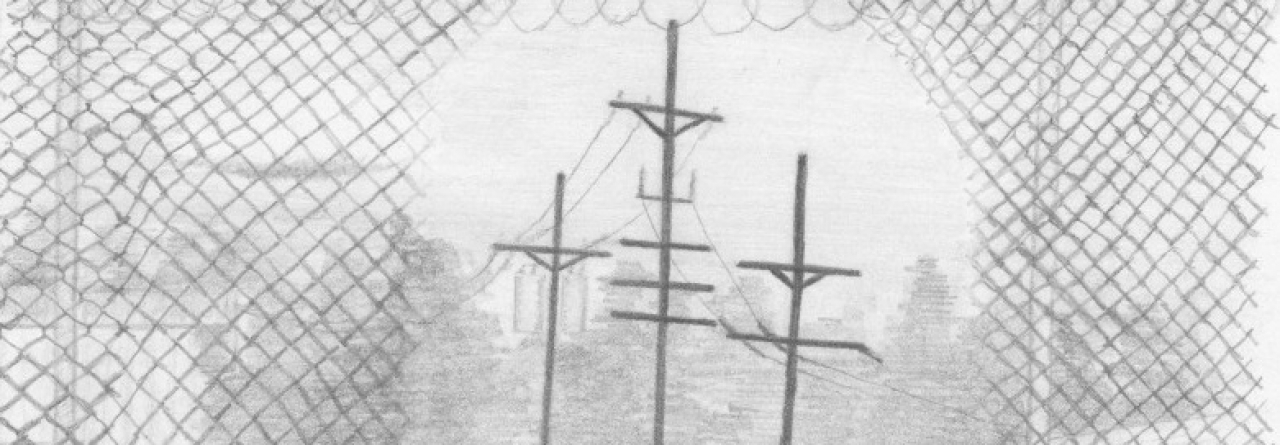
“Giving a Voice to the Victims: Speaking for the Victims of Freedom, Part II”

“Okay, this is what the good guys do. They keep trying. They don’t give up.”   Cormac McCarthy  “The Road”  

” ‘You will succeed’, said the Lord. ‘Go ahead and do it.’ ”   1 Kings 22:22 NLT

“I asked, ‘What should I do, Lord?’ ”   Acts   22:10a NLT     

“Don’t be afraid! Speak out! Don’t be silent!”   Jesus   Acts 18:9b NLT     

      I was gently informed by the woman who wrote so eloquently about healing and forgiveness, that those who have dealt with sexual abuse consider themselves to be survivors of it as opposed to being its ongoing victims. I applaud her, and those like her. I admire their courage and their ability to control things that happened TO them rather than letting those things control them as human beings.

      There is no way of knowing how many survivors are out there, but it is highly likely that there are many times more who are still victims living day to day with the pain of past – or present – abuse. Some published estimates place the number of females in this country who were sexually abused as children at one out of every three. Similar reports also estimate that the number of males who were sexually abused as children is between 1 in 7 and 1 in 4.

      While politicians push emotional hot buttons in a quest for votes, and media outlets sensationalize tragedy and capitalize on fear in their quest for ratings, studies show that the greatest threat to children does not lie among faceless predators lurking in the community. The most reliable sources available estimate that somewhere between 90-93% of all sexual abuse occurs by a family member or acquaintance.

      In her book “A Nation Of Wimps”, Hara Estroff Marano, award winning author and editor-at-large of Psychology Today writes, “In fact, the greatest threat of child physical and sexual harm arises INSIDE the home, presented by family members, often stepparents, and especially stepfathers……Infants and children who do not live with two biological parents face forty to ONE HUNDRED times the chance of being killed within the family as those who live with both biological parents.”

      Why, then, is so much time, effort, and money spent on these misguided efforts to protect our children from dangers lurking outside the home when the overwhelming majority of incidents occur within?

      Quite likely, it is because of tragic stories such as one I read recently in an Arkansas newspaper about a 16 year old girl whose body was found buried in a barrel on property owned by the family of the prime suspect in her disappearance. The suspect was already a ‘Level 3’ registered sex offender who apparently ‘met’ the girl on a social networking website, struck up some sort of relationship with her and ultimately got her to agree to meet him. The evidence points to her willingly being picked up by him, but it ended horribly for her, and her family and friends.

      The fact that this particular individual was a registered sex offender did nothing to help this poor young woman or keep her safe. To compound the situation, he was a ‘Level 3′ offender. Let’s look at what that means, for therein lies part of the problem we face today, albeit a small part since these types of crimes (for all of the massive amounts of publicity they receive) are relatively rare:

      The suspect in this case had been sentenced in 2001 to ten years in prison. He was released in 2008 after serving about 7 years of his sentence. That original crime? He entered a woman’s home through a window, held a box-cutter to her throat, taped her mouth shut, and raped her.

 Seven years.

      Just to put things in perspective, let me say that I am surrounded by individuals serving 7, 10, even 15 years in prison for looking at pictures. I am most certainly NOT insensitive to the fact that the pictures in question involve children. The individuals involved with the production of these pictures should be dealt with severely. Of that there is no question, but so too should the individual who uses threat of physical harm, or death, to take from a woman (or man, for that matter) that which should only be given freely.

      That woman was a victim. Whether she is a survivor I do not know. I pray that she is and that God has given her some peace and comfort and helped her to heal.

SEVEN years.

      For raping a woman after breaking into her home and threatening her by holding a razor to her throat.

      If this individual had gotten a sentence of, say, 30 years, perhaps the young woman he is now accused of murdering and stuffing in a barrel to be hidden away in an unmarked grave would still be alive, doing the things that 16 year olds do. Perhaps the time will come in this country when crime, criminals, and the victims the crimes create will be dealt with in a manner that is devoid of emotion, haste, sensationalism, and political grandstanding, because the truth of the matter is that dealing with crime – even crimes involving children –  in the heat of emotion makes for bad laws and bad decisions that punish everyone, including the victims of those crimes by taking much needed funding away from where it can do the most good, or by clogging courts and prisons with so many people that the truly violent have to be released to prey again.

      Cases such as this are heartbreaking to the extreme. They are tragic, senseless, and emotionally explosive. They receive hours of air time on television and days of coverage in the newspaper. Grieving parents are sidled up to by politicians drawn to the cameras and the reporters as moths are to a flame. Fists are shaken like sabers before battle and various new laws are passed in haste that pertain to the unique set of circumstances of that particular tragedy.

      Unfortunately, the nest senseless tragedy will be accompanied by its own unique set of circumstances.

      As we seek to make children safer there are those who would argue that what is being done is having a reverse effect. In a passage from “Perverted Justice”, author and forensic psychologist Charles Patrick Ewing writes:

      “From the research, however, it appears that the emperor has no (or very few) clothes. The consensus of empirical research is that these sex offender registration and notification laws have no statistically significant effect on sex offender recidivism and thus fail to provide the protection upon which they are premised and which they promise to the public. Related laws that restrict the residences, workplaces, and movements of sex offenders also appear to do little if anything to reduce recidivism and may have the unintended consequence of making sex offender recidivism more likely because they engender hopelessness in some offenders, impede their contact with social support networks in the community, and create disincentives for pro-social behavior. Moreover, these laws may make citizens (especially children) less rather than more safe because they engender a false sense of security.”

     In an article in “Prison Legal News”, Lt. Ruben Diaz, who heads the sex crimes unit for the Harris County Sheriff’s office in Texas, admitted that it is “very rare to find a perpetrator of a new sex crime among those already in the registry”.


     According to a blog called “Sentencing Law And Policy”, the National Center For Missing And Exploited Children states that there are currently 747,408 registered sex offenders in this country, an increase of 25% since 2006 ALONE. The number continues to grow at an ever-increasing rate and is on track to grow another 10% just this year. Those convicted of possession of child pornography make up the largest number of additions to sex offender registries in this country. James Lang, chief of the criminal division of the US Attorney’s office in Massachusetts was quoted as saying, “There’s been recognition nationwide that there’s been an epidemic.”

An epidemic indeed.

     The Supreme Court of this great nation has unconscionably legitimized immorality and the removal of God from many aspects of daily life. It has endorsed the absence of any requirement of decency in the way that people live and it has paved the way to the creation of this nation’s obsession and preoccupation with sex.

     As America descends deeper into the depths of depravity and degeneracy, those who have become obsessed are now becoming the obsession itself. Society has become so maniacally obsessed with the sex OFFENDERS that the waves of arrests and the flood of new legislation and restrictions on a select class of citizens’ freedoms and liberties threatens to overturn society and capsize the very core of its existence.

     And all because we have the right to use our freedom in pathetically meaningless and depraved ways that contribute nothing TO the good of mankind and take away much that is good FROM it.

     In the meantime, as local, state and federal governments struggle to find ways to pay for services that taxpaying citizens should have a right to expect, hundreds of millions – indeed, BILLIONS – of dollars are thrown into a cesspool of our own making rather than going to the very agencies that were created to protect children in the first place.

     Every state in the union has some form of child protective agency. Instead of using them for their intended purpose, and growing them to meet today’s special needs, we have turned the FBI into a very ineffective, and very expensive child protective agency while at the same time we reduce funding to these very critical, very well-positioned agencies that were designed to do what the name implies – protect children from neglect and physical, emotional, and sexual abuse. It is easy to find stories in almost every state about cutbacks in funding. Poorly trained case workers and investigators, and fewer of them in today’s world are things that should not be tolerated by anyone who claims to be a protector of children.

     There is no dispute from any quarter that the overwhelming majority of the dangers that exist to children comes from family, friends, or acquaintances. It should be as obvious as the problem itself that funding for these agencies should be a top priority. More investigators and caseworkers who are better paid and better qualified. More therapists to turn the victims of child sexual abuse into survivors.

     It’s time to take steps that will substantively help these young victims become survivors through education, treatment, and therapy. It’s time to spend money where it will have a positive impact on someone’s life rather than using it to paralyze an entire nation, filling its citizen’s with fear and paranoia about dangers that comprise a small percentage of the damage done to children through sexual and physical abuse and neglect.

     I look forward to one day being able to write about the SURVIVORS of freedom rather than its victims, but until we re-focus our energies, intellect, and resources on solutions that can actually fix problems, we will just continue to incarcerate more people and make their re-entry into society a near impossibility, thereby effectively destroying MORE families and creating hundreds of thousands – if not millions – of victims of another kind.

     It’s time to stop the madness and end the sadness that comes when this nation’s children are victims of freedom not used well.

     I thank you for your time. God bless you and your families.

‘Giving a Voice to the Victims – Speaking for the Victims of Freedom’

“A man’s worst difficulties begin when he is able to do as he likes”   Thomas Henry Huxley

“As life unfolds, it is difficult to understand the consequences of our decisions and actions. We start from the right principles, having the noblest of dreams and, in time, we come up against our own monstrosity, the vile and cruel consequence of what we have done.”    From “The Last Pope”   Luis Miguel Rocha

“For you have been called to live in freedom, my brothers and sisters. But don’t use your freedom to satisfy your sinful nature. Instead, use your freedom to serve one another in love.”  Galatians 5:13 NLT

 Chiseled words of inspiration adorn a low wall on the campus of Penn State University:          “USE WELL THY FREEDOM”

      A federal prison such as the one I am in is filled with individuals who have failed to do that. However, one does not have to be in prison to fail to use freedom in a manner that honors the lives that were lost in obtaining it in the first place, or the millions that have been lost in battle to preserve it since.

      I am sure the Penn State campus is quite large. But still, one has to think that Jerry Sandusky could not help to see those very words many times in all of the years that he was associated with that fine institution. If the charges against him prove to be true, it could safely be said that the meaning implicit in them totally escaped him.

     When freedom is not used well, there are victims…..and far too often, those victims of freedom are children.

     Children inevitably bear the brunt of many of the bad choices and decisions made by adults in the exercising of the freedoms to which we think we are entitled. In many ways, we certainly are entitled to those freedoms. But the freedom to make our own choices and decisions should also carry with it an obligation to make mature, responsible ones that take our children, spouses, friends, neighbors, and society as a whole into consideration as well.

     If that sounds like a lot of responsibility, it is simply because freedom IS an enormous responsibility. Far too often, freedom becomes centered around ‘me’ to the exclusion of anyone else. That is when the victims begin to accumulate, piling on top of one another at a constantly increasing rate until there are so many victims of freedom that is NOT used well that it becomes impossible to count them all or hear their individual cries for help.

     In past articles I have written about what I believe to be the over-use of incarceration in this country and I have expressed my opinion that it would be more prudent to implement more effective ways of dealing with the majority of those individuals who do not use their freedom well.

     In many ways, those of us who are incarcerated are victims of our own decisions on how to use – or misuse – our freedom. This does not exonerate us, excuse us, or render us innocent. Nor does it alter the fact that we are still victims. We are just not the most important, the most affected, or the most damaged ones.

     That distinction, unfortunately, lies with children. The smallest, most innocent, and most vulnerable among us are always the first to fall prey to morals that are pushed aside or freedom that is abused. They are the primary victims of our own selfishness, self-indulgence, and self-centeredness.

     Children are also casualties of constant legal battles engaged in to expand the rights of individuals to act in a manner that ignores the basic responsibilities of human decency, human dignity, and human nature; battles fought to prove that we have the freedom to live our lives as we see fit, with no thought or consideration given to the effects our actions have on our children or the children of others; battles fought to give us the legal right  – the freedom – to ignore the messages we are sending them as to what constitutes appropriate dress, demeanor, morality, or the respect of themselves or others.

     Society today is obsessed with sex. Sex sells everything, so everything must be about sex. We glorify and reward bad behavior and the famous bad men and women who indulge in it. We pay homage to individuals with empty hearts who marry publicly, reap millions in rewards, then shed themselves of what should be a sacred union with the casual attitude one might display in discarding a pair of soiled underwear.

     They are the ones who use their freedom in the most empty, immoral, and meaningless of ways and they are the ones we emulate and try to ‘keep up with’.

     Society whips itself into a frenzy of misplaced morals, improper thoughts, and questionable behavior which ultimately results in lines being crossed, opening the door through which unspeakable horrors enter.

     The children then become the victims of freedom. They are robbed of their childhood, raped of their innocence, and subjected to emotional and physical pain that is impossible to fathom unless one is unfortunate enough to be a victim as well.

     Anyone who doesn’t think that television shows such as ‘Shameless’ promote immoral thoughts and behavior is sadly mistaken. Anyone who doesn’t think that the instant availability of ‘adult’ pornography through 4.2 MILLION websites highlights a serious problem in this country is kidding themselves.

     Forty MILLION United States users visit pornographic websites daily because that is how they choose to use their freedom and their time. There is a website that promises ‘affairs guaranteed’ by connecting people looking for sex outside their marriages. The site proudly boasts 12.2 million members. There is a Smartphone app that uses GPS technology to facilitate instantaneous no-strings gay hookups in 192 countries.

     Are these behaviors what is meant by “USE WELL THY FREEDOM”?

     If you think that these pursuits do not contribute to an immorality that promotes child sexual abuse, you are very, very wrong.

     As our collective moral fiber decays and disintegrates with each blow to decency dealt by an increasingly permissive society clamoring for still more freedom for ‘ME’, an ever-growing number of children become victims who spend lifetimes in hell – trying to climb out – trying to look in a mirror and see goodness and purity after it has been stolen from them by people who have become obsessed with sex and the pursuit of pleasure because that is what society exemplifies as the best way to use our freedom.

     In searching for words to use to convey the nightmare of sexually abused children, I was led to these words written by author Greg Isles in his novel “Blood Memory”:

     “Children suffering prolonged and repeated sexual abuse are living in concentration camps. They’re under the power of despots on whom they depend for their very survival. They suffer terror and torture on a daily basis. Their own siblings, and often their mothers, betray them in the struggle for survival.”

     Harsh, uncomfortable words, some might say. But I suspect that no one who has been sexually abused would think that this even comes close to the reality he or she is living – or has lived – on a daily basis.

     My own insensitivity, immaturity, irresponsibility, and immorality in looking at and possessing child pornography is a personal horror and shame that I live with each day that I wake up in prison. I will continue to live with that shame for the rest of my life, but it pales in comparison to the horrors that the children in those pictures experienced. Perhaps, with proper therapy they can be renewed. Without it, they will doubtless serve a much longer and much harsher sentence than I.

     So then, what am I saying, exactly? Am I calling for harsher sentences for those who have viewed child pornography? No, actually – quite the reverse. This effort to imprison the people who have viewed child pornography only diverts billions of dollars throughout this country from where it can actually do some good. The only winners the way this problem is currently being addressed are those who profit from the illogically harsh first-offense sentences this country uses to solve its problems.

     To try and keep children safe and stem the flow of child sexual abuse in this country by filling our prisons and sex offender registries with misguided individuals who have viewed child pornography can be compared to the approach the government used in the infamous ‘war on drugs’.

     Nationwide, government officials tried for decades to stop the drug trade by ‘picking the low-hanging fruit’ – the drug USERS – and filling our prisons with them, clogging up our courts and costing the taxpayers untold billions of dollars in the process.  However, the drug problem remains a bigger business than it ever was. The only lasting impact in that ill-advised ‘war’ has been to leave the victims of drug abuse with no money to fund treatment or provide help.

     If you pay close attention to what is happening throughout this country today, you will see that the exact same ‘low-hanging fruit’ mentality is at work once again. This time, the ‘low-hanging fruit’ are the viewers of child pornography and the victims are the very individuals who self-serving politicians and law enforcement officials claim they are trying to protect: sexually abused children.

     I’ll explain how this is happening and how sexually abused children can be better protected, better helped, and better healed next time.

Giving A Voice To The Victims

“My job is to take care of you. I was appointed to do that by God.”   – Cormac McCarthy , “The Road”

“Children are a gift from the Lord; they are a reward from Him.”    – Psalm 127:3 NLT

“But if you cause one of these little ones who trusts in me to fall into sin, it would be better for you to have a large millstone tied around your neck and be drowned in the sea. – Jesus Matthew 18:6 NLT

I pray daily.

I pray from the depths of my heart. Often my prayers go something like this:”Lord give me the wisdom that will enable me to write words that will somehow make a difference in someone’s life. Illuminate my path and lead my heart and my hand to a way of communicating that will help me to do my part to leave this world that you created, and the people in it, in a better way than I found them.”

I struggle with that concept, for the world and the people in it are in dire need of God Himself. What can a mere man do – a man who is in prison, no less – to change or improve anything for anyone?

Praying for an answer to that question, the path is suddenly made clear and I am led to the words of Helen Keller: “I am only one. But still, I am one. I cannot do everything. But still, I can do something. I will not refuse to do something I can do.”

With the encouragement of my editor and inspired by the courage of a very special individual who wrote to me and wishes to share thoughts about their own struggle with being sexually abused, I have decided that I can do this: I can, in a very small way, give a voice to victims of sexual abuse.

Some cannot or will not speak for themselves, so I will humbly – and most likely inadequately – endeavor to use my voice on their behalf. Others, like the young person who I am sure God is using to help me find my way, will speak for themselves.

That is my hope.

That is my prayer.

That collectively, all of our voices will be heard clearly around the world with the knowledge that, together, we are more than one and with God lighting the way, the something we can do can change things, if only just a little.

We cannot change the whole world. We cannot change everything.  But we can change something. We simply must not refuse to change the something we can.

WHO ARE THE VICTIMS?

–  According to an Associated Press story I read some time ago, forty eight women are raped hourly in the Congo. The article went on to state that 400,000 women were raped in a twelve-month period between 2006 and 2007.

–  A more recent· AP story showed a horrific photo of a fifteen-year-old child bride in Afghanistan who was viciously tortured and sexually abused in her in-laws’ basement for six months. They ripped out her fingernails, broke her fingers, and tortured her with hot irons – all in attempts to force her into prostitution

–  According to a report by RAINN, the Rape, Abuse, Incest National Network, in which statistics from the U.S. Departments of Justice, Health and Human Services, and various others quoted, there are 207,754 victims (age 12 or older) of rape and sexual assault each year in this country. That’s the equivalent of one every two minutes.

– Also according to RAINN, in 1995 (the only year for which I had statistics) local child protection agencies identified 126,000 children who were victims of either substantiated or indicated sexual abuse. Of that number, 75% were girls. 30% of them were between the ages of four and seven. Of the assailants, 34% were family members, 59% were family acquaintances. Only 7% were strangers to the victim.

The first person to lend their voice here knew the assailant very well. While the victim does not offer specifics about the abuse or the individual responsible, the victim’s Christian-based thoughts are centered on healing and forgiveness – a healing and forgiveness made possible by a strong support system and the understanding that sustained, professional counseling will help with the pain and suffering, the life-long wounds sexual abuse leaves on a person’s soul.

As society struggles to determine how best to deal with the perpetrators of sexual abuse, the victims struggle to deal with recovering from the abuse itself.

How does one go about reclaiming something that has been taken in a way that leaves the victims feeling responsible somehow? Leaves them feeling less than whole? Leaves them feeling alone, isolated, abandoned and ashamed?

Here, then, is the voice of a victim:

I applaud the courage and determination of the person whose words you find in the next article in this series.  I applaud the commitment to heal and help the one who wronged.

If anyone would like to share a story in a future article or comment without your e-mail address being published, please write to: oakdaletoc@gmail.com.

We did something at least. We can do more.

I thank you.

Send your stories to:      oakdaletoc@gmail.com

A Sex Offender Like Me: The New Kid in Town – Part 3

“We spoke of the whites. ‘They’re God’s children, just like us,’ he said. ‘Even if they don’t act very godlike anymore. God tells us straight – we’ve got to love them, no ifs ands or buts about it. Why if we hated them, we’d be sunk down to their level. There’s plenty of us doing just that too’.” – John Howard Griffin     “Black Like Me”

“Don’t say, ‘I will get even with this wrong.’ Wait for the  Lord to handle the matter.” – Proverbs 20:22 NLT

      The ‘hater’ with the tattooed proclamations of love for God and hatred for others returned with another man Alan hadn’t crossed paths with yet, but who was familiar to me and  everyone else in the unit as the loudmouthed leader of the movement to control people’s lives and suppress the rights of anyone with sex-related offenses.

      If Alan was intimidated at all by the physical appearance and demeanor of the first man, the second man’s appearance should have been enough to send his nervous system into sensory overload. To say this man was unpleasant to look at would be an enormous understatement.

      Whereas the first man’s eyes were pale, cold and devoid of any friendliness, the second man’s eyes were the eyes of a ferret … dark little beady spots that darted about as they peered out from a greasy-looking face that was scarred and pockmarked, mercifully covered with a beard that was mostly grey. I say mercifully because the beard helped to cover a small weak chin set in an altogether unattractive countenance and helped to mask the fact that most of his teeth were missing. His hair was very fine, thinning, greasy-looking and usually worn with rubber bands spaced a couple of inches apart up its twelve-inch length, giving it the appearance of a rat tail. Like his beard, his hair was predominately grey. He was only about 5’8″ tall. His lower body was slight of build but his arms showed evidence of a view toward “working out” that only consisted of repeated lifting of heavy objects to bulk up his arms. His stomach was huge, fed by a constant stream of snacks and meals whenever he was observed in the unit. Sometimes it seemed as though his eating was the only thing that prevented the unpleasantness of his nasal backwoods twang from permeating the air of the housing unit.

      He had a rather offensive habit of wearing only shorts, socks and sandals around the unit in the evenings when he was in “relaxed mode.” His status provided him a front row center seat in front of “his”  television and he would sit there, sometimes for hours, staring at the screen, usually munching by spoon or hand from an ever-present bowl of chips or something that had been “cooked,” prison style, in one of our two microwaves.

      The man’s stomach was so large and so round, it appeared to sit in his lap and every square inch of it was covered in tattoos, most of which were more than likely applied during one of his many years in state or federal prison. In fact, every bit of visible skin not hidden by shorts or socks was covered in tattoos.

      In particular, the ink on the stretched skin of his stomach looked like a freakish collage painted in blue on a flesh-colored over-inflated balloon.

      As Alan’s further misfortune would have it, the man was in “relaxed mode” when he was brought to the cell where Alan was waiting apprehensively and he was totally unnerved when he stood facing this grotesque beast.

      Alan was asked again, this time by the “beast”, what his charge was and when he began to offer an explanation, he was immediately told to stop, pack up his meager possessions and leave the cell. He was informed that they would have other arrangements made because he was definitely not welcome in that cell.

      Holding his bedroll and little bag of toiletries, Alan wandered out into the common area. Observing an empty chair near a game table, he sat down to await his fate.

      Unfortunately, there were two things wrong with what he did: it was not his chair and sex offenders were not allowed to sit at the game tables. Alan, of course, had no way of knowing these things at this point so he was probably unaware that his actions were only serving to pump up the overall hostility level and increase the tension which, like the rubber band attached to the propeller on a little balsa wood airplane, was being wound tighter and tighter, approaching the point at which it might break.

      Seeing this, someone who sides with those who hate but is a bit more merciful about it, moved him over near the wall and arranged for him to sit in a chair until some sort of resolution was arrived at.

      Many minutes later, Alan was approached by both the “hater” and the “beast” and told to go see the counselor again. He was given another room assignment across the hall from his first one and down a few doors from where he had been sitting.

      He was met at the door to that cell by its current occupant who made it instantly clear that, “You’re not staying in here!” At that point, he stormed past Alan on his way to the counselor’s office, huffing and puffing, beating his chest and loudly proclaiming that he was not going to have this man pushed off on him.

      Given the size of the unit itself and the dynamics of living in a place where small things are big news, word was rapidly racing through the unit that this latest addition to the “chomo” population was getting a hard time. All the while, I sat quietly oblivious in my cell reading a newspaper. Now I am no one’s mother, father, leader or savior. But I do try to make sure that new people are made aware that they are safe and have people to go to with questions or needs.

      In a way, I failed Alan that day by remaining in my cell. But I just felt that we had progressed to a level of tolerance where it was not necessary to stand on the rail and gawk, adding to the discomfort that newcomers feel. As evidenced by what was transpiring outside my door and down the stairs, I was wrong.

      Once again, Alan was placed in the chair along the wall. Most of the activity swirling around Alan – the angry looks, the cursing and grumbling spoken louder than was necessary, the marching in and out of the counselor’s office – was all for show . . . a lame prison version of “shock and awe.” As it is with gorillas loudly beating their chests and giving their fiercest roar, most of what was transpiring was for show. But to the uninitiated, it can all combine to be tremendously intimidating, demeaning and nerve-wracking.

      The individual who had originally “rescued” Alan attempted to calm him down, told him to just sit in the chair and he would be right back. The knock on my door came a few moments later.

      Well folks, Alan did survive that day and, as most people do has adapted in his own way – a way that works best for him – to life in an environment that just a short time ago was as foreign to him as one could possibly imagine.

      As I have said, most enter this place without any discernable tension. For some, however, like Alan, it can be a frightening experience when you’re the new kid in town.

A Sex Offender Like Me – The New Kid In Town – Part 2

“He wondered why people thought they had to die in order to go to hell” – James Lee Burke “Feast Day of Fools”

“Don’t pick a fight without reason when no one has done you harm” – Proverbs 3:30 NLT

      The air crackled with tension as my foot hit the bottom stair.

      I observed tight unsmiling looks on the faces I could see and noticed several people avert their gazes as I glanced in their direction. The person who had come to get me was waiting near the bottom of the stairs and I looked at him and asked, “Where is he?”

      “Over by the wall,” he responded, using his head as a pointer to indicate the direction in which I should go.

      As I turned and started walking in the direction indicated, I could see the person I was looking for sitting in a chair by the wall about twenty feet away. As I moved toward him, I could see that he was a rather rotund middle aged white male. He had somewhat long thinning salt and pepper hair, a very thick and  well-established beard and moustache, which was also salt and pepper, but both the hair on his head and face leaned more toward salt than pepper. He also wore wire-rimmed glasses.

      In the midst of all that had transpired before my presence was requested, someone had at least had the decency to get the poor man one of the plastic chairs that come with the cells we are issued and he was frozen in that chair up against the wall between two cells.

      He leaned forward slightly, his ankles crossed and tucked beneath him and his hands clasped in front of him, his elbows resting on the arms of the chair. His gaze was straight ahead and down, as if he had seen all he wanted to see. Even from the side, I could see a look on his face and in his eyes that sent my thoughts and emotions hurtling back to April 6th of 2010.

      As clearly as if it had happened the day before, I remembered the full range of my emotions as I made my way up the walk toward my “new home” here in Oakdale.

      At that moment, looking at the frightened man before me, all that I had felt on that day long ago flooded over me as if it had happened just ten minutes earlier. Yet somehow, at the same time, it also seemed as if it had happened so long ago as to have not happened at all.

      But it did happen, of course, and I knew this. The part of me that remembered it with such crystal clarity allowed me to feel the anticipation as I approached the building that day all over again.

      Flashing through my mind as well was the sense of foreboding that built as the faces lining the walk in front of the building loomed larger with each step I took. I could only hope that I didn’t look as frightened as I most definitely was.

      I recalled the inquisitiveness of their eyes turning to a visceral loathing in some as their assessment of me, my crime and my worth as a human being transformed from simple curiosity to a virtual certainty, if only in their minds.

      My perception of the conclusions that were being arrived at was confirmed as I passed by the one I have referred to before who stood like a sentinel near the doorway with his large, tattooed arms crossed over his equally large chest.

      He sniffed the air and spoke three words as I passed: “Smells like one.” Those three words contained all I needed to know about what awaited me inside, a taste of what hell must be like. “Smells like one” … words that, when pulled from the place in my mind where unpleasantness is stored, still had the same chilling effect that they did when they first spilled from the mouth of the man whose self-appointed task it was to be among the first to let me know I was not welcome.

      All of this coursed through my mind and body as I took the few final steps to the person who seemed frozen in fear in front of me.

      I knew that, regardless of how unnerving my own experience had been, it would prove to be sedate compared to what this man was living through.

      After introducing myself and assuring him that he was not alone and everything was going to be alright, he told me his name was Alan.

      The look in his eyes showed a slight sense of relief as I’m sure mine did so many months before when Aaron tapped me on the shoulder and said pretty much the same thing.

      I was anxious to hear what I had missed since I had chosen not to be part of the visual gauntlet newcomers had to walk through.

      Much of the time this had proven to be wise since most of the new arrivals seemed to be entering without incident or unnecessary drama.

      Not so with Alan, as I discovered later after we got him temporarily bunked with another older white male, also a new arrival, although quite vocally not a sex offender like me and, apparently, Alan. Things had gotten a little too heated and expressive this time though and a cooling down period was required. More permanent sleeping arrangements could be made later and he could tell me what  had happened to create such a tense atmosphere.

      “I’ll tell you . . . we don’t want you people. Don’t you understand that?”

      That statement is from “Black Like Me” and the words were spoken by a white plant foreman in Mobile, Alabama in 1959 to a “black” John Howard Griffin. They could just as easily have come from the mouth of the man in the first cell Alan was assigned to that day.

      Upon his arrival, Alan took the bedroll he had been given into the cell he had been told he was to live in. As he began to put his sheet and blanket on the top bunk, the other occupant of the cell entered.

      As bad luck would have it, Alan had been placed in a cell with a man whose tattooed body proclaimed a love of God on the same pasty white flesh on which his hatred of others was evidenced by other artwork that proclaimed his white supremacy.

      He is what is commonly referred to here as a “hater,” and less desirable as roommates than non-whites to him are those with sex related charges.

      When he walked through the door, he instructed Alan to stop what he was doing for a minute. I can only guess at the emotional churning taking place within Alan as he took in the physical appearance of the man who was now challenging Alan to assure him that his charge was “straight.”

      The man’s eyes were pale and displayed not one tiny measure of friendliness or welcome. His shaved head and goatee, combined with the ink on his skin that crept out of the collar and sleeves of his t-shirt, served to flash a warning that this was not a person full of warmth and benevolence.

      To the question asked, about his charge being “straight,” Alan groped with the intended meaning and settled for responding, “I’m not a homosexual, if that’s what you mean.”

      That reply would have been  humorous were it not for the fact that simply not knowing what was implied by the question told the one asking it what he needed to know. He was actually looking for verification that Alan’s charge was a “good” charge – drugs or bank robbery or any other such glamorous event. Not knowing what “straight” meant could only mean that he was a “chomo,” a sex offender like me.

      The man instructed Alan to stop what he was doing and just wait, at which time he walked out of the cell door. Alan was no doubt left wondering how the long stressful day was going to end.

      Alan had begun the day almost eighteen hours earlier in Oklahoma City where he was awakened at 2 a.m. to be processed for travel.

      Oklahoma City is the site of a large Bureau of Prisons facility; a large hub or distribution center. Federal inmates headed to all different parts of the country pass through OKC, usually staying there only a week or two. Some may stay a little longer but usually not much.

      Alan had spent about a week in OKC, arriving there from a CCA facility in Mason, Tennessee. He had spent about three weeks there after being sent there from court following his sentencing. That day’s wake-up call would send him to Oakdale FC!, where he had been “designated” by the BOP to serve at least the beginning of the time given him by the federal judge back in Pulaski County, Arkansas.

      After being awakened, he and the forty others chosen for the trip were moved to a holding area where they were processed out and prepared to board a bus for the journey to Oakdale.

      With wrists in handcuffs, ankles in leg chains and both of these secured to another chain that circled each prisoner’s waist, they were finally loaded onto a prison bus at around 4:30 a.m., each man carrying a bagged meal for the trip which consisted of four slices of bread, two slices of meat, two slices of cheese, a small bag of chips and a drink. This would be their only sustenance until their arrival in Oakdale at around 3:30 p.m.

      When they finally arrived, I imagine that Alan saw pretty much the same thing that I had as the prison came into view, although the glass in the bus windows had wire running through it and there were metal bars bolted to the outside. I, on the other hand, had the unobstructed view of the window of my brother’s car.

      Still, the day he arrived was gloriously sunny and the razor wire along the top of the high chain link fences glittered in a way that was somehow appealing to the eye yet incredibly frightening at the same time.

      All of the hours spent sitting on the hard plastic seats of the bus, still wearing all of those chains, probably made even that sight perversely welcome as the senses perked up with the knowledge that the tedious discomfort of the bus ride was almost at an end.

      Once the bus was securely inside the enclosure built to receive it, the inmates were led off and into the facility where they were unchained and placed in the holding cell.

      Undoubtedly the sensation of movement stayed with Alan and the others and they remained numb and dazed as they were all processed into their strange new community.

      After four more hours of waiting, having been given another bagged meal similar to that given in OKe, having been given a bedroll and a bag of toiletries, Alan and the others were led off toward the housing units. Our unit was first, so Alan and a few others were dropped off here. It was late for new arrivals, the time being around 7: 30 p.m. or so.

      Alan entered the place he was assigned to live tired, dazed and apprehensive. He had not had a stellar day to this point, to say the least, but it was going to have to get considerably worse before it would get better.

. . . . To be continued

A Gray-Beard Behind Gray Bars

Written by Steve Marshall

      Before I came in, I lived in faded Levis, a myriad of rock ‘n’ roll t-shirts, (souvenirs of countless rock concerts in days past) and an ever-present baseball cap.

      I am young.

      I take my stairs two at a time and I am seldom under the weather. I have never had a serious illness and can count the days I have been hospitalized on the fingers of one hand.

      I am young.

      So it always takes me by surprise when someone addresses me as “Pops” or calls me “Old School.”

      “Hey, Old School.” That’s the name reserved in here for anyone over the age of fifty. Makes me want to respond, “Yeah, Pre-School?”

      I am young because I think young. I am not in denial of the fact that I am sixty-eight years old. I know my hair, what remains of it, is snow white and I have a beard to match. But thinking young is my best defense against the encroaching years.

      When I first came in, I saw an elderly figure sitting in front of his cell. He leaned on his cane, had no teeth in his head and very thick glasses. He walked as though he carried the weight of the world on his shoulders. I pegged him for early to mid-eighties. I wondered what someone that old was doing in prison. Finally, I asked someone how old the gentleman was and was told that he was sixty-seven . . . one year older than I was at  the time. To say I was shocked would be an understatement.

      I was assigned a cell with a man who was two years my senior. This is a man who hated rock ‘n’ roll (“Those Beatles were nothin’ but loud noise!”) walked around humming “The Camp Town Races” and listened faithfully to “The Prairie Home Companion.” To me he seemed to be much more of my grandfather’s generation than my own.

      I am young.

      Oh, the hell with it. Facts are facts. Before I came in, I collected social security and was on Medicare. I had been eligible to join AARP for over fifteen years. So okay, for the purposes of this article, I will grudgingly admit that I’m getting up there. So what’s it like being a senior citizen (blech) in prison?

      To most of the inmate population, I am invisible. As I move about the compound, others tend to look through me. If they do see me at all, I am totally inconsequential to them.

      There are certain advantages to this.

      First and foremost, I am safer than most of the other men who populate this world. Seldom is someone of my age ever targeted for violence because there is no cache in beating up an old man. In fact, the inmate’s code holds that anyone who would beat up an old man would receive retribution of the severest order. Just last week, a man about my age was found standing “too close” to the television. The viewing area was empty except for him but he is a sex offender and therefore required to view television from the back row. Someone approached him and ordered him to move. He refused, saying he wasn’t hurting anyone or anything. With that, the offended party hauled off and slapped the older man hard enough to knock him down. Within fifteen minutes, two other inmates sought out the violence-prone individual and exacted their revenge, prison style. All of them are now locked down in the Special Housing disciplinary unit, including the old man who was slapped.

      But incidents such as this are rare. If an older man minds his own business and doesn’t smart off to anyone, he will normally go about his business unmolested.

      Still, many of the prejudices and judgments made against older people in the free world are here, often even amplified.

      When I first arrived at Oakdale, I was assigned to work on the serving line of the dining hall. It’s a fast-paced, pressure filled environment. One of the others working on the line has a pre-set bias against older men, automatically assuming them to be slow and suffering from some measure of diminished capacity.

      In the year and a half that I have worked on the line, he has never spoken a kind word to me.

      I work hard and my energy reserves are the equal of any man there. I have never once been responsible for the line having to slow down. While my position is somewhat menial, I take pride in doing a good job at it. But back in July, the corrections officer normally administers the dining hall was rotated to another department for the quarter. The prejudiced individual went to the new man running things to complain that I was slow, confused and couldn’t get along with anyone else on the serving line, none of which was remotely true. I was then demoted to “Spoon Roller,” a job usually reserved for older inmates, which consists of sitting at a table rolling up sporks with salt packets in a paper towel, to be passed out at mealtime. My pay was cut from $36.00 a month to $5.25. I did the work without complaining and two months later, when the original man in charge returned, I was immediately reinstated to my former job. The man who had me demoted swore he would quit if I returned to the serving line but that proved to be bluster.

      What has been hardest to accept for me as an older inmate in a federal prison is that these are supposed to be my “golden years.” While I am presently in good health, a seven and a half year stretch for someone of my age could easily become a life sentence. My greatest wish is that I do not die in a place like this. I remain focused on that goal.

      I have a granddaughter who was born five months after I went into house arrest. I have met her once, when my daughter and her husband visited and brought her to see me shortly after she turned one. When I get out, she will be nearly seven years old. I mourn the passing of each day that I cannot be a part of her life. But she is regularly shown pictures of me and I talk to her each week on the phone. She is two now and still can’t quite figure out where that voice is coming from or how a person could be small enough to fit into that tiny device. But I struggle to make an impression nonetheless; to let her know who her “Popi” is and just how very much I adore her. I hope it takes.

      Now if you will excuse me, I’ll revert to the state I was in.

      I am young.


A Sex Offender Like Me: Just Like Sticks and Stones

“My revulsion turned to grief that my own people could give the hate stare, could shrivel men’s souls, could deprive humans of rights they unhesitatingly accord their livestock.”   John Howard Griffin –    “Black Like Me”

“Lord, you have heard the vile names they call me.” – Lamentations 3:61A NLT

      I have never been fond of the word “nigger,” but I suppose I never really gave much conscious thought as to what effect calling a person one could have on that person’s dignity either. That is, until I heard the word “chomo” -·used -by someone talking to me.

      Of course, I should have known that just like sticks and stones, names can cut; they can sting; they can bruise and make one bleed; just not in the conventional sense, such as physical objects that are wielded as weapons and used to strike someone and cause pain or physical injury.

      But the hurt is there just the same, perhaps in an even more painful and damaging way. Scars develop but instead of being physical blemishes that become items of curiosity and discussion, these scars mar the beauty and dignity of an individual’s soul. They are ugly and meant to be hidden, viewed only by the bearer and are best left unmentioned and undisturbed for fear that talking about them can somehow reopen the wounds.

      You see, being called “chomo” was not my first exposure to the indignity of hateful names wielded as weapons; names whose sole purpose was to hurt, embarrass, demean and diminish the recipient in order that the one wielding those weapons might somehow make himself appear to be superior.

      When I was in high school, I was the object of such weapons due to the fact that my hair was coarse, wiry and very curly.  One person began a hateful – and hurtful – “game” of singling me and my hair out for attention by calling me names such as “nigger knots, ” “Brillo pad, ” “pubic-head,” and a couple of other insults related to both male and female genitalia; all embarrassing, all hurtful and demeaning and all met with no response on my part which, I suppose, gave the one wielding those weapons the perception of power and superiority he sought. Perhaps he needed that perception to compensate for some feelings of diminished capacity or ability on his part. I don’t know. I never asked him nor did I ever respond to him. But after forty-plus years, I can still feel those words strike me with almost physical brutality. I can still remember his name and I can still see his face – full of meanness and ignorance – as he struck me with those weapons of words.

      In a way I think that injuries caused by those words were more debilitating than those caused by any actual sticks or stones I had ever been struck by. I feel this way because of the clarity with which they are remembered and the degree of hurt, embarrassment and shame that accompanies the memories.

      But all of that is nothing compared to what I, and sex offenders like me, face here in prison and will face in the future as we step outside these walls and attempt to move forward with whatever remains of our lives.

      In our present situation as men serving a physical punishment of “freedom denied” as prescribed by law we, as sex offenders, are reminded on a daily basis of our lack of status in the prison “food chain.” From the selection of tables in the dining hall that tend to identify an individual as “one of them,” to being unofficially but undeniably deprived of the right to work in certain areas or use certain recreational facilities without being confronted and intimidated; from the absence of sex offenders, like me, at the tables in the housing unit set aside for playing cards or engaging in a chess match; to the dictating of where “we” can sit while watching one of the four televisions recently moved out of the enclosed TV rooms (from which we were “banned”) into the common area. All of these things and more cry out to us a silent “chomo” that can be heard loud and clear even when the word is spoken with an averted gaze as opposed to an open mouth.

      It should come as no surprise that every restriction, every rule, every attempt to demean and diminish is prompted by the exact same types of individuals who fomented the hate, anger and violence toward African-Americans in the south in decades past. They exhibit the same white-robed, hooded predilection to press downward on a group, class, creed or race of people for no other reason than to feed the need to overcome their own ignorance by demonstrating self-perceived superiority.

      These weak-minded, loudmouthed individuals who publicly profess to being the true arbiters of law and justice within the confines of the compound cover the whiteness of their own skin with tattoos that reveal the blackness of their hearts. They have taken to preying upon sex offenders because, for the most part, they can spew their venom without fear of reprisal. After all, we are older, nerdier and less accustomed to violent ways than the average inmate.

      The perception of weakness is like the scent of fear to a junkyard dog to those whose need is to beat down another human being for no reason other than to cover up their own ignorance, insignificance and inferiority.

      It would be laughable were it not for the seriousness with which these peddlers of prejudice and hate practice their self-anointed supremacy.

      It would be laughable were it not for the fact that being singled out for hate has an impact on one’s perception of oneself, even when the haters are as insignificant as cockroaches in the grand scheme of things.

      It would be laughable were it not for the fact that words – even those unspoken – can and do hurt, even when we pretend and profess that they don’t.

      Just like sticks and stones.

Inmates – In Their Own Words; The Faces of Felons – Steve’s Story

HOLIDAY ‘ON ICE’ – by Steve Marshall

       My apologies to the venerable Ice Capades for filching the name of their evergreen winter extravaganza for the title of this article. It seemed appropriate.

       I’ve been dreading the approach of these last two months of the year because the holidays so thoroughly kicked my posterior last year. After the passing of Halloween, 2010, a mantle of depression settled over me that clung tenaciously until the dawn of the new year. It seemed so strange to lose touch with all happiness in a time of year that I have always embraced with such unbridled joy. Christmas for me was the aroma of a roasting twenty-five pound turkey permeating the house; the annual custom of spending the two days immediately after Thanksgiving decorating every room in the house, including three Christmas trees; the discarded detritus of colorful bows and ripped wrapping paper littering the living room floor; the joyous faces of grandchildren eager to share with me all the news of what Santa had brought them. Nothing else in the world was as capable of making me so happy.

       Now these occasions serve only to remind me of the enormity of what I have lost, squandered really, in the mindless pursuit of satisfying a horrific, out-of-control addiction.

       I’ve lost my freedom, of course, and that is important. I now live in a place where I have no authority or independence; where strangers have the right to run their hands over my body and do so every day, checking to see what I might have stolen or what contraband I might be secreting on my person; a place where I cannot perform the simple act of walking through a door without waiting for someone to come and open it. Here, my very existence is defined by the long list of things that I can no longer do for myself.

       But I’ve also lost something even more precious . . . my family. My arrest and the subsequent revelation of my wrongdoing blasted my family into two camps . . . those who still love and support me and those who cannot. Days after my arrest, my wife Patty informed me that our marriage was at an end. For her, the trust that I had so recklessly violated could not be salvaged. She remains my friend, sending me weekly letters with news of home and pictures of the growing grandkids. But one of those recent letters contained the news that she has found another love and is moving on.

       My son, who was seventeen at the time of my arrest, was so shattered and disillusioned that he could barely speak to me in the days, months and years that followed. This is a boy who, in the third grade, was assigned a three-paragraph essay on the person he admired most in the world. I was certain he would pick Arnold Schwarzenegger. . . but he wrote about me. The enormity of what I took from him is incalculable. Just two weeks ago, though, my son and I had a fifteen-minute phone conversation that was relaxed and good-natured in which he said he was looking forward to hearing from me again. So a little light is shining into that heretofore dark corner of my life.

       My granddaughter was ten when the blast came. She had thought the sun rose and set upon me. I had helped raise her and she was like a daughter to me. We haven’t spoken in two and a half years.

       My real daughter was pregnant with her first child when she was sucker-punched with the news of her dad’s arrest. But she came back swinging and has been my rock ever since. Her daughter was born without her Popi present as I was under house arrest at the time. It wasn’t until more than a year later that I was able to hold her in my arms for the very first time. It was in the visiting room here at Oakdale. Last week I applied for a transfer to California, where I might have the opportunity to see and hold her on a regular basis.

       In retrospect, I am astonished that during the entire time I was so obsessed with indulging my sorry addiction on the Internet, I never once gave any thought to what it would do to my family should these dark secrets be hauled into the harsh light of day. It’s a telling sign how all-consuming this sickness can be. But I honestly believe that if I had considered the possible consequences, it would have been enough to stop me.

       Perhaps a power greater than I will see to it that someone in a similar circumstance reads these words and finds a reason to rethink his behavior. I know such people are out there by the thousands. That would be a Christmas gift that I could really wrap my head around . . . saving someone from going down the same road I did.

       So I’m just a few weeks away from having made it past another holiday season. I have four more of those to make it through until my projected release date of July 19, 2016. By an odd coincidence, that will be my seventy-third birthday. It will begin a new chapter in my life. With my legal debt to society having been met, I can begin paying on the huge karmic debt that hangs over me. I plan to do so by living my life in such a way that I have nothing to hide from anyone and will take advantage of whatever opportunities I have to be of service to others. In so doing, I hope it will enable me to regain the sense of joy and beauty that Christmas has always held for me.

“Decisions, Decisions, Decisions: A Nap, A Party, and A Birthday Gift”

 “We make decisions, and then our decisions make us.”      R. W.Boreham

“Are any of you suffering hardships? You should pray.”     James 5:13a NLT

            Each one of us makes decisions many times every single day. Most of the decisions we make are very minor, inconsequential ones that have little, or no, real impact on our day-to-day existence. Still others have a slightly greater effect on the course we are on and then, at a few points in our lives, major decisions are made with prior, full knowledge of the life-altering potential of those decisions: decisions on which college to attend – or whether to go at all; to get married; to get divorced; to change jobs; start a business or even to start a family.

            And then there are those decisions that are born in the first category that – for some seemingly unfathomable reason – grow up having a totally unexpected, unplanned, and profound effect on the person making the decision and – usually – many others around that person.

            Most of the decisions that wind up in this category have tragic consequences. Some have criminal consequences. Still others have both.

            I am going to “introduce” you to several people that I don’t actually know. In one case, I don’t even know the individual’s name, but as the circumstances surrounding their decisions unfold, hopefully we will all realize that we do, in fact, know them (or someone just like them), and the names are not important, just as where they live is neither relevant or significant.

            What will be important is what each of us discovers about ourselves as we consider the circumstances of these people and the effects of the decisions that they made – on themselves and those around them.

            Teresa Chapin, 37, of Council Bluffs, Iowa made a decision to put a 5 month old child down for a nap at a daycare she owned.

            In Des Moines, Iowa, 17 year old KeeVon Bernstine, a prominent member of the Lincoln High School football team, made a decision to go to a party.

            And way over is Las Vegas, Nevada, the granddaughter of Claudette Porter, 75, made a decision to give a very special birthday gift to her grandmother.

            As a result of these three seemingly innocuous decisions, there were 3 deaths, 1 person was hospitalized, 2 people were jailed, and many lives were affected, several in ways that can never be adequately described through the black-on-white words of a man sitting in prison for decisions he made.

            Here, then, are the stories of a nap, a party, and a birthday gift:

            On August 17, 2011, Teresa Chapin put 5 month old Lane Thomas down for a nap. It was about 2:30 pm. When Ms. Chapin’s young daughter went to get him at 4 pm she “found his cold, unresponsive body lying face down.” Ms. Chapin performed CPR. Someone called 911.

            Lane had been placed on an adult bed for his nap. After an autopsy, the infant’s death was attributed to “sudden unexplained infant death.”

            Ms. Chapin voluntarily surrendered her license to operate her daycare on August 25. She was arrested early in October and charged with “neglect of a dependent person”, which carries a maximum penalty of 10 years in prison, and “child endangerment”, which is punishable by up to 5 years in prison.

            According to the story in “The Des Moines Register”, Sheriff Jeff Danker said, “Teresa is a licensed day care provider in the state of Iowa and has experience and education about child development needs. A provider should have been aware of the hazards of excessive bedding for an infant the age of Lane Thomas.”

            Teresa Chapin made a decision to place 5 month old Lane Thomas on an adult bed for a nap and, tragically, he died, and she now faces up to 15 years in prison.

            We will discuss this tragedy further, but right now, let’s tell the story of KeeVon Bernstine’s decision to go to a party.

            According to police, Bernstine had been at a party on July 17, 2010 when a 20 year old “female acquaintance” informed him that she no longer wanted to speak to him.

            In an article in the “Des Moines Register”, Bernstine “reportedly became upset and started yelling at her. When she yelled back, Bernstine allegedly slammed her against a car and punched her in the face knocking her out.”

            Witnesses reportedly saw the assault and took the woman to the hospital, but not before Bernstine had “kicked the alleged victim in the head twice while she was unconscious, authorities said, which caused swelling, bleeding, and numbness to the left side of her face.”

            He was not charged in this incident until early October, for some reason. Bernstine is facing 5 years in prison for “willful injury causing bodily injury”, a Class ‘D’ felony, as well as 1 year in prison or an $1875.00 fine for “assault causing bodily injury” which is a “serious misdemeanor”.

            KeeVon Bernstine made a decision to go to a party where he made another decision. He decided – “allegedly” – to react so violently to rejection by a “female acquaintance” that he punched her in the face, knocking her out. Then kicked her in the head twice as she lay there unconscious – absolutely, totally, completely defenseless.

            For these brutally violent actions Bernstine faces – if convicted – a maximum of 6 years in prison.

            It must be stressed, of course, that both parties are innocent until proven guilty in a court of law. Again, we will come back to Mr. Bernstine in a moment, but first, our third – and final story. The story of the very special birthday gift.

            According to Jim Porter, his wife Claudette, 75, had talked about going skydiving for 20 years. A granddaughter – for whom no name was given in the brief “USA Today” article I read – went to veteran instructor James Fonnesbeck to purchase a special birthday gift for her grandmother: A “Skydiving Adventure”.

            During the tandem jump – where the instructor and “student” are harnessed together, the primary parachute failed to deploy fully. The instructor pulled the cord to release the backup parachute, but it got tangled up and failed to open as well.

            Claudette Porter and Mr. Fonnesbeck plunged to their deaths.

            Fortunately, Claudette Porter’s granddaughter was not arrested. This fact is probably the only bright spot to be found in any of these stories.

            The article did not state who was present, but I imagine that, at the very least, Jim Porter and the granddaughter were there, sharing this special occasion with Mrs. Porter. What I cannot imagine is their shock and utter horror as the realization hit them that something had gone terribly, terribly wrong.

            I ask all of you to turn to the Lord with me and pray for the man who watched his wife, as well as another human being, fall to their deaths as a longtime dream come true turned into a nightmare of horror and a lifetime of loss. I ask all of you to join me in prayer for the granddaughter as well. She is undoubtedly devastated that her well-intentioned gift of love turned into a tragedy of death and she will probably claim responsibility for it, and suffer through it, for a long time to come.

            Obviously, this innocent decision to give a special birthday gift to someone she loved has altered the course of her life. It has altered the course of Jim Porter’s life as well as the lives of all the rest of Claudette Porter’s friends and family. Finally, it has altered the lives of the family and friends of the instructor, James Fonnesbeck, and we must also pray for them as well.

            In the case of Teresa Chapin, she made a decision that parents, grandparents, and babysitters have made for probably as long as there have been beds. I am guilty of doing the same thing with both my daughter and my son. Fortunately, the dozens of times I made that same decision did not result in the same tragic ending as Ms. Chapin’s did.

            A child is dead and his parents – well, suffice it to say that it is doubtful many of us can comprehend the depth of their pain. We can, however, offer prayers that God will wrap them up in His love and give them comfort in their time of sorrow.

            At the same time, we should also ask God to wrap Ms. Chapin and her daughter in that same love for this tragedy has effectively, irrevocably, altered the course of both of their lives.

            The article did not give the age of Ms. Chapin’s daughter, but given her own age of 37, most likely she is in her teens. Can any of us possibly imagine trading places with that young woman as she reaches out to wake Lane from his nap, only to feel his “cold, unresponsive body”?

            I shudder to the very core of my being as I try to envision what it must have been like as the reality of the situation began to sink in and reveal itself to her.

            I can almost hear the shocked screams of disbelief and horror as she cried out to her mother, and I can almost feel the ensuing chaos and confusion as CPR was administered and 911 was called.

            And I can almost feel their agonizing helplessness as the fact that this tiny boy was to never go home to his parents again began to penetrate and take root in their minds.

            There is no doubt that the effects of this tragedy will stay with all concerned for the rest of their lives.

            As for the decision to charge Ms. Chapin with a criminal act, I honestly cannot comprehend what possessed the local authorities to do so, but the only purpose that can possibly be served is to complete the devastation of Teresa Chapin’s life, to say nothing of her daughter’s.

            There will be no winners here, that she – her business – will be held liable for civil damages is a certainty, though obviously any settlement will fall pitifully short of replacing what was lost to Lane’s family.

            It seems sadly typical of today’s society, though, to label a tragic accident as a criminal act as if doing so can somehow help. We seem to do that more and more these days and use the law as if it were a magic salve capable of wiping away pain.

            Seriously – what victories are to be won here? What can possibly be achieved? I, for one, think the point has already been driven heartbreakingly home.

            May God bless, and help, them all. And may God also help a society that things making things worse somehow makes them better.

            Of course, now we are left with the story of KeeVon Bernstine.

            Although Lane Thomas died in August, charges were not filed against Ms. Chapin until early October. The day the story of her arrest appeared on the front page of the “Des Moines Register”, Bernstine’s story appeared on page two of the sports section under the heading “High School Football”.

            That fact told me that, perhaps this story was less about a brutal attack on an unconscious, defenseless young woman, and more about the impact of the arrest of the alleged perpetrator of that attack on high school football.

            Another testament to the misplaced priorities of this country. (Something I can certainly feel free to speak about since no one’s priorities were more misplaced than my own.)

            According to the story, Bernstine had rushed for 946 yards and 15 touchdowns in the first six games of the season. Quite impressive to say the least.

            The director of activities at Lincoln High School, Phil Chia, said that the incident was a Des Moines Public School “Code of Conduct” violation and that the punishment for a violation was suspension for a third of the schedule or, in this case, three games.

            The article went on to state that his coach was surprised with Bernstine’s arrest and that he was “disappointed” in him. “I know him real well,” the “Register” quoted Coach Tom Mihalovich as saying. “He’s got a good heart.”

            I would agree, coach. It takes an individual with a very good heart to punch a woman unconscious and then brutally kick her in the head – twice – as she lay there totally defenseless.

            I do hope, however, that his heart is now helping him to pray to God daily, thanking Him that the young woman didn’t die, asking for forgiveness, and also asking that there be no permanent physical damage to her although the fact that she will undoubtedly suffer long-term mental and emotional damage is a given. May God help her through all that she faces.

            Of course, all of this is only “alleged”.

            If true, however, Bernstine should spend a little time in prison, since prisons should exist only to house violent offenders, and if this is not a violent act, then I don’t know what is.

            I do pray that he can change, that he wants to change, and that he asks God to help him change, but it is important to note that this was not a little after-school fistfight in the parking lot that can be chalked up to “boys will be boys”. This was a wanton act of inexcusable violent behavior that could easily have ended with the young woman’s death, or permanent disability. It was an act that should require at least some length of incarceration combined with intensive anger management counseling and he should not be allowed to touch a football for any school again.

            But wait a minute! 946 yards and 15 touchdowns in 6 games? This is a young man who could go places! I mean, aside from his on-the-field performance he is already exhibiting the very unprofessional character of many of today’s professional athletes and sports figures.

            Perhaps his talent had something to do with why it took so long to arrest him in the first place.

            It must be noted that a follow-up article in the same paper (and also in the sports section) the day after the first article reported that he had been kicked off the team and not merely been suspended.

            That would be the least that the public could expect, I think, and I certainly applaud that decision, but one has to wonder if Bernstine’s obvious talent will somehow buy him greater consideration for his willful, violent criminal act, than will be given Teresa Chapin for her part in a tragic accident.

            Whatever the legal ramifications for his ‘alleged’ actions, I truly hope he fixes that which is broken within himself before it consumes him and defines his life. Hopefully he will learn that talent without character is nothing, although it sometimes seems that many in this country don’t seem to understand that.

            Quite often, in today’s society, the desire to win – at anything – trumps everything else. Athletics in particular these days appear to be less about character building than they are about winning at any, and all costs, and if we have to overlook bad – even criminal – behavior on the part of the very people our children look up to and desire to emulate, then so be it. In light of these all-too-permissive attitudes, it is more than likely that Bernstine will land on his feet and continue to play ball somewhere and, ultimately and unfortunately – if history has its way – the only lesson to be learned will be that if you have talent, anything goes.

            I pray I am wrong and I would like this prayer to be answered.

            The young man is in need of our prayers, though, regardless of the outcome of all this, as is the young woman who suffered his anger. Bernstine has a gift and when he realizes that his gift came from God, maybe he will pray, himself, for an opportunity to use it for God.

            As for the young woman, I pray that she has suffered no permanent physical damage and that any emotional damage goes away quickly. I also pray that she puts this – and Bernstine – behind her and finds a life of laughter and joy to replace the violence and pain she experienced.

            May each of us pause for a moment to pray for all of the people who have been written about here today: the three individuals who made these seemingly harmless, inconsequential decisions and the many, many more who, like the three, were changed in some way forever when those decisions grew into something very, very different from what was intended at the outset.

            May we also pause for a moment and look inwardly and consider the things that are happening around us as a result of decisions we have made. May we think carefully and ask God for His guidance in everything we do, and how we do it, for some things – once done – can never be undone.

            None of you wants to be the main character in any of the stories I have just told, and you surely don’t want to end up in a place like the ones in which these words were written as a result of a decision made.

            I thank you, as always, for putting up with me. May God Bless each one of you

“Letters to Heaven” Dear God,

Dear God,

      Though the biggest challenges of my life lie off in the distance and are yet to come,  I feel more mentally equipped and spiritually prepared to be an active participant in my own small purpose within your creation than I would have ever thought possible.

      At this stage of my life, where I should  be “winding down”, looking forward to retiring, and enjoying the fruits of my labor, I am forced to acknowledge that I have put myself in a position where I must begin again, as if I were a young man – which I am not.

      Curiously enough, I find that I look forward to that beginning with no small measure of excitement and pleasure. And it is all due to the fact that, in an incredibly short amount of time, I have come to know you, to trust you, to love you, and to rely on you for everything.

      And for having the patience to wait for me to arrive at this point, I thank you, Lord, from the bottom of my heart.

      It may have been human hands that physically picked my body up from that blood-covered floor, but it was your love that caused it to happen – it was YOUR love that lifted me up and gave me life once again.

      For this, I thank You each and every day.

      We spend a lot of time together these days, and every second is – to me – a blessing. Indeed, every breath that I take is a gift from You and is one stolen from the hand of evil that were so tightly wrapped around me that they were nearly successful in squeezing the remaining life from my body.

      It’s a fantastic deal really, this arrangement You and I have, Lord. I give you all of my troubles, problems, worries and fears.

      I give You the burden of all of my sins.

      You give me forgiveness and – through the wisdom of your word and the power of your spirit – You give me the ability to forgive myself.

      I am thankful to You, Father, for ALL of this.

      Your light shines on the path that I walk and You illuminate all that is important.

      You open my eyes to the world you created, and all of the people in it, and You have taught me to ask several questions:

–          “What can I do for others to help them find what took me such a long and painful journey to find?”

–          ”How can I help others to understand what it means to know you without them needing to surrender to the same measure of sadness that I did before turning to you?”

–          ”How can I help others to experience the shear joy and feeling of freedom that comes from stepping out of their darkness and into your light?”

      For helping me to become someone who would even attempt to and answer to those questions, I thank You once again.

      These are very troubled times in the history of Your creation. This is a very troubled world.

      At a time when You are needed the most, people turn towards You the least; because to turn towards You means turning away from so many things that provide instant gratification, meaningless pleasure, and momentary satisfaction.

      Your apostle Paul could easily have been describing today’s troubled times when he wrote:

“For people will love only themselves and their money. They will be boastful and proud, scoffing at god, disobedient to their parents, and ungrateful. They will consider nothing sacred.

They will be unloving and unforgiving; they will slander others and have no self-control. They will be cruel and hate what is good.

They will betray their friends, be reckless, be puffed up with pride, and love pleasure rather than god.

They will act religious, but they will reject the power that could make them Godly.”

                                                                                    –2 Timothy 3:2-5a

      As the saying goes, “If You are not part of the solution, You are part of the problem.”

      Thanks to You, Lord, I am certain that I still have the time, and will get the opportunity, to be a part of the solution, and I guess I figured that by writing an open letter to You full of all the things I talk with You about daily, maybe – just maybe – someone else will stop and think and ask a few questions of themselves.

      There will be those who will read these words and will react skeptically, and with cynicism, thinking the worst and moaning about the insincerity of “prison converts”.

      I know this, and to them I will respond with, “obviously I am not trying to win the approval of people but of God.” Galatians 1:10A NLT

      And as I read more and more of Your wisdom, God, I learn, and as I learn I realize I must share what I have learned with others. “The man who had been freed from the demons begged to go with him. But Jesus sent him home, saying, ‘No, go back to your family, and tell them everything god has done for You.’”

      So here I am, and You have helped me again, Lord, and – with faith – perhaps I can help someone else.

      Even if it is just a little.

      Thank You,

-Tony.